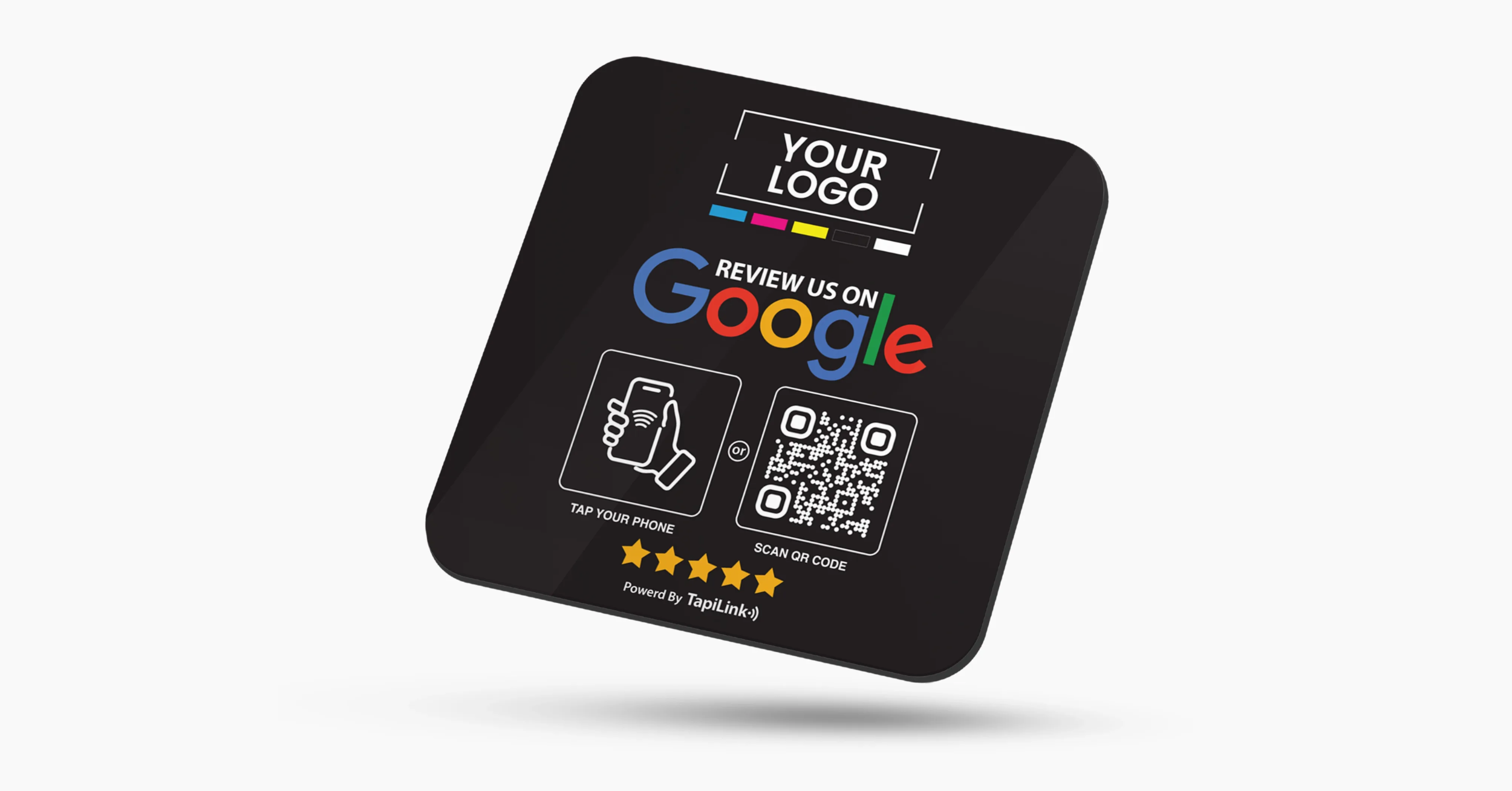
Choosing between NFC review plates and QR review plates can directly affect how many reviews your small business collects. Both tools are designed to make it easier for customers to leave feedback, but they work in different ways and deliver different results depending on your environment, audience, and goals.
If you run a café, salon, retail store, or service business, the real question is simple. Which option removes the most friction for your customers and generates more reviews at the point of interaction? NFC review plates offer a one-tap experience, while QR review plates rely on scanning with a phone camera. Each has strengths, limitations, and ideal use cases.
In this guide, we compare NFC review plates vs QR review plates side by side. You will learn how each technology works, where it performs best, and which option is better for small businesses looking to increase reviews, build trust, and improve local search visibility.
NFC Review Plates vs QR Review Plates: Side-by-Side Comparison
| Feature | NFC Review Plates | QR Review Plates |
| Customer action | One tap on the plate | Open camera and scan code |
| Speed | Instant, one step | Slower, requires alignment |
| Ease of use | Very high, tap and go | Familiar but adds friction |
| App required | No | No |
| Compatibility | Most modern Android and iPhone | All smartphones |
| Visibility | Subtle, clean look | Highly visible code |
| Engagement rate | Typically higher on-site | Moderate, depends on lighting |
| Best for | Cafes, salons, retail counters | Mixed-age audiences, signage |
| Premium feel | High | Medium |
| Setup effort | Minimal | Minimal |
Which Is Better for Small Businesses: NFC or QR Review Plates?
For most small businesses, NFC review plates are the better choice when speed, ease of use, and in-the-moment engagement matter. A simple tap removes friction, making it more likely that customers will leave a review before they walk away. This is especially effective in cafés, salons, retail counters, gyms, and service desks where customers naturally pause.
QR review plates still have value in situations where maximum device compatibility is needed or where visibility from a distance matters. They work well for mixed-age audiences, tourist locations, or environments where NFC may be disabled. However, the extra step of opening a camera and scanning can reduce completion rates during busy moments.
Many businesses see the best results by using dual NFC and QR review plates. This approach captures both tap-first users and scan-first users, ensuring no customer is excluded. If your goal is to collect more reviews consistently with minimal effort, NFC-led or dual-technology plates deliver the strongest long-term results.
Understanding NFC and QR Review Plates: How Each Technology Works
Before deciding which review plate belongs on your counter, it helps to know what’s happening under the hood.
NFC review plates
– Contain a tiny, passive chip that wakes up when a smartphone comes within a few centimetres
– Automatically launches a pre-programmed URL (for example, your Google review form) in the customer’s browser
– Operate without batteries or an app, drawing minimal power from the phone’s antenna
– Can be re-programmed remotely or paired with analytics dashboards that log every tap for performance insights
QR review plates
– Display a printed matrix barcode that any camera-equipped phone can scan
– Route customers to the same review page, loyalty form or promotion you specify
– Works on virtually every smartphone, even older models without NFC
– Allow easy duplication: print the code on receipts, signage or packaging
QR codes have a head start on compatibility because every phone camera reads them. Yet NFC is quickly catching up; per TapiLink’s own industry commentary, 85 percent of consumers already use tap-to-pay or loyalty tools, making most modern phones NFC-ready. As device adoption rises, both technologies now cover the vast majority of customers.
Knowing these basics sets the stage for a fair comparison of effectiveness, so let’s look at each plate in greater detail.
NFC Review Plates: Contactless Convenience
A single tap is all it takes, no lining up a camera or zooming in on a code. Many plates also ship with multi-protocol chips and anti-metal shielding, enabling accurate reads on metal counters while feeding data to cloud dashboards for real-time insights into tap volume and location performance.
Adoption is already gaining momentum. One hospitality software article on personalized NFC plates highlights how restaurants are using them to streamline menus, promotions and instant feedback, evidence that the technology is suited to fast-moving service environments.
Common use cases include:
• Table-side review prompts in cafés and quick-service restaurants
• Checkout-counter plates in boutiques and salons where customers naturally pause
• Loyalty enrolment at hotel reception desks
• Self-serve kiosks collecting feedback in tourist attractions
QR Review Plates: Universal Accessibility
QR plates still shine where simplicity and visibility matter most.
Strengths:
• Zero learning curve, customers know to “point and scan”
• Cost-effective to produce, with print-ready artwork and no electronics
• Works even if a phone’s NFC antenna is disabled
• Easy to scale: the same code can appear on menus, posters and receipts
Potential limitations small businesses should weigh:
• Some shoppers remain wary of unknown QR codes because of phishing headlines
• Camera alignment or poor lighting can slow the scan, adding friction
• A visible code can detract from premium décor if not designed thoughtfully
Understanding where each technology excels, and where it may stumble, prepares you to choose the plate that will earn the most reviews from your unique customer base.
Effectiveness in Collecting Customer Reviews: Real-World Results
When you reduce every barrier between a happy customer and the “Leave a review” button, the numbers speak for themselves.
As TAPro’s case-study shows, “We added one to every salon mirror. Within the first week, we got 13 new 5-star reviews. Clients loved how easy it was. No awkward ask. Just a quiet plate, doing its job,” reports Jasmine, a spa owner in Atlanta , clear evidence that NFC/QR plates can multiply feedback overnight.
Many retailers echo that momentum. One product FAQ notes that businesses often gather 10–20 reviews daily thanks to the tap-or-scan simplicity of dual-technology plates, underscoring how frictionless access translates into consistent, scalable results.
Below is a snapshot of how customers typically interact with each format and why those differences matter for engagement:
• NFC plates: one-second tap, no camera alignment and instant browser launch often yield higher on-the-spot participation
• QR plates: familiar scanning flow and large visual prompts attract casual browsers, yet require steady hands and good lighting
• Dual NFC + QR plates: combine both benefits, capturing virtually every smartphone user and letting each choose the path that feels simplest
• Reduced friction: whichever technology removes extra steps wins more reviews, especially during peak hours when customers have limited patience
Taken together, these figures reveal a direct line from convenience to review volume , a connection that becomes even more valuable when those fresh five-star ratings lift your visibility in local search.
Case Studies: Salon and Hospitality Success Stories
The salon example above isn’t unique. Restaurants and cafés are seeing similar lifts by placing plates at checkout, while hotels position them at reception desks to capture feedback before guests depart. Hospitality analysts note that NFC plates, already popular for interactive menus, naturally double as review triggers, a synergy that turns every table or counter into a quiet reputation engine.
Key tactics in service venues include:
• Mounting plates at eye level near exits so satisfied diners can tap on their way out
• Using countertop stands at coffee bars where wait times give customers a spare moment
• Adding discreet plates to guest-room desks so hotel visitors can review during their stay
• Pairing review prompts with loyalty perks , for example, a free pastry on the next visit
Reported Results: Review Volume and Engagement
For many small businesses, the winning formula is unlimited usage plus zero app downloads. Dual-tech plates deliver exactly that, letting customers choose between a tap or a scan while you track every interaction. Businesses reporting 10–20 additional reviews each day highlight how even modest foot traffic can compound into hundreds of new testimonials per month , far beyond what paper receipts or post-visit emails typically achieve.
Higher engagement doesn’t end at quantity; it also means richer qualitative feedback, more photos and greater keyword variety, all of which strengthen your online profile. In the next section, we’ll see how that steady flow of fresh reviews turns into better rankings on Google and other platforms.
Impact on Online Reputation and Google Rankings
Customer reviews aren’t just testimonials; they are ranking signals. According to TAPro’s blog post on review optimisation, Google rewards businesses that gather frequent, high-quality feedback because fresh comments, location cues and relevant keywords help its algorithm verify local authority and relevance.
The article explains that more reviews improve a company’s odds of landing in the coveted Google 3-Pack, while recent posts boost trust among searchers and keywords inside reviews echo the phrases prospects type into Maps and Search, all of which combine to drive visibility and clicks , a direct link between review volume and revenue growth “Google’s algorithm favors local businesses that collect frequent, high-quality reviews”.
The mechanics behind that uplift break down into three powerful effects:
• Review freshness – new ratings signal active customer engagement, encouraging Google to consider your listing more relevant than a dormant competitor
• Keyword inclusion – customers often mention service specifics (“best vegan brunch in Bristol”) that match real search terms, reinforcing topical authority
• Location signals – each verified review ties your business to its physical address, strengthening “near me” relevance and the likelihood of appearing on local maps
• Trust amplification – a steady stream of recent five-star feedback reassures potential patrons and increases click-through rates, which in turn feeds positive performance metrics back to the algorithm
With the ranking benefits clear, the next question becomes how to maximise tap or scan activity on-site. That’s where strategic placement and well-briefed staff make all the difference, a subject we’ll tackle in the following section.
Practical Considerations: Cost, Setup, and Sustainability
For many owners, the biggest selling point is a one-time purchase that keeps working day after day. Plates marketed for small businesses advertise unlimited uses with no subscription fees, making them markedly cheaper than recurring SMS or email-based review software.
Activating a plate is equally straightforward. NFC versions usually arrive pre-programmed; you simply link the device to your Google Business Profile via a web portal, place it on the counter and start collecting feedback. QR-only options are even simpler, print, mount and you’re done. Either way, staff training boils down to pointing at the plate and saying, “Just tap or scan.”
Environmental impact is another decisive factor. Research on green networking highlights that paper cards have a dismal life span, 88 percent end up in the trash within a week, whereas a single NFC or dual-tech plate can process thousands of interactions over several years, slashing waste and signalling eco-friendly values to customers.
With costs contained and sustainability boxes ticked, the final piece is placement and engagement strategy, topics we’ll unpack next to ensure every plate you deploy pulls its weight.
Best Practices for Placement and Maximizing Engagement
To turn a countertop gadget into a review-gathering powerhouse, location and visibility matter just as much as technology. Keep the following tactics in mind:
• Position plates where customers naturally wait, checkout counters, reception desks or exit doors, so they can tap or scan without breaking stride
• Mount devices at eye level and pair them with a brief, friendly prompt such as “Share your experience with a quick tap”
• Use contrasting colors or a small spotlight to ensure the plate stands out from the surrounding décor
• Test multiple spots over a few weeks, track interaction data and relocate underperforming plates until you find the sweet spot
• Provide a clear cleaning routine so fingerprints or smudges never obscure the code or chip area
Staff involvement amplifies these efforts. When employees mention the plate during checkout, “If you enjoyed your visit, feel free to tap here for a quick review”, customers receive a polite nudge without feeling pressured. Rotating the device’s position or signage every few months also keeps it fresh and noticeable; one best-practice guide suggests that optimised placement can increase engagement by 20–30%, transforming passive foot traffic into active reviewers.
With strategic placement and staff support in place, you’re ready to choose which plate, or combination, will serve your unique business goals, a decision we’ll distill in the final section.
Making the Right Choice for Your Business: Key Takeaways and Next Steps
NFC plates excel at ultra-fast, one-tap interactions and pair neatly with analytics dashboards, making them ideal for cafés, salons and retail counters where every second counts. QR plates win on universal compatibility, low upfront cost and visibility, perfect for mixed-age audiences or venues with older devices. Dual-technology plates combine both strengths, capturing virtually every smartphone user while giving customers the freedom to tap or scan.
Consider these guiding questions:
• Do your customers linger at fixed points (counters, tables) where a quick tap feels natural? NFC plates may drive higher conversion.
• Do you serve a broad demographic, including tourists or older patrons with NFC-disabled phones? QR visibility ensures no one is left out.
• Are sustainability and brand perception priorities? Reusable plates outlast disposable flyers and signal eco-friendly values, especially given the 88 percent discard rate of paper cards highlighted earlier.
• Are you ready to monitor results? Plates with cloud dashboards let you track tap or scan volume and fine-tune placement for maximum impact.
Ultimately, the most effective solution aligns with your customer journey, staff workflow and growth goals. Many small businesses find success starting with one plate at checkout, measuring results and then scaling to additional spots, or combining NFC and QR for blanket coverage.
Ready to transform casual compliments into searchable five-star proof? Contact TapiLink for a personalised consultation and explore our range of customisable NFC and QR review solutions tailored to your business.
Ready to revolutionize your networking approach? Explore TapiLink's range of premium NFC business cards and join the thousands of professionals who've already made the smart choice.