The best dog ID tags in the UK combine clear owner identification, durable materials and a reliable way to contact you if your dog goes missing. Traditional engraved dog tags remain useful for displaying essential details, while modern NFC and QR code dog tags offer editable digital pet profiles. For many owners, using both provides a practical balance of legal identification and convenient contact sharing.
At TapiLink, we believe a dog ID tag should do more than hang from a collar. Our smart NFC and QR pet tags connect to digital profiles where you can manage contact details, pet photos and important care information. Whether you own a playful puppy, an adventurous Labrador or a small companion dog, choosing the right identification tag can make it easier for someone to help your pet get home.
This guide compares the best types of dog identification tags available in the UK, explains what UK law requires and helps you choose the right option for your dog.
What Are the Best Dog ID Tags in the UK?
The best dog ID tag depends on your dog's lifestyle, your preferred identification method and how frequently your contact details change.
Here are five options worth considering.
1. Smart NFC & QR Code Dog Tags – Best for Digital Identification
Smart dog ID tags use technologies such as Near Field Communication (NFC) and Quick Response (QR) codes to connect a physical collar tag to an online pet profile.
Instead of relying entirely on the limited space available for engraving, these tags allow finders to access additional information through a smartphone.
With a compatible smart tag, a finder may be able to:
- Access your dog's digital identification profile.
- View the contact information you choose to share.
- See a photograph of your pet.
- Read important medical or care instructions.
- Contact you using the details provided.
- Share their location where that feature is supported and enabled.
One option for UK pet owners is the TapiLink Smart NFC & QR Pet Tag – Paw Design.
This waterproof pet identification tag combines NFC and QR technology with an editable digital profile.
Why choose the TapiLink Smart Pet Tag?
- NFC tap and QR code scanning.
- Editable owner and pet information.
- No subscription required for essential features.
- Compatible with supported iOS and Android smartphones.
- No battery or charging needed.
- Waterproof construction for everyday use.
- Optional finder-initiated location sharing.
Unlike a GPS tracker, the TapiLink tag does not continuously monitor your dog's position. Instead, it helps a person who finds your dog access information that may assist with a safe reunion.
The physical Paw Design tag has a standard appearance, while its linked digital profile can be personalised.
Best for: Dog owners who want an easy-to-update digital ID alongside their dog's legally required physical identification.
Explore the TapiLink Smart NFC & QR Pet Tag.
2. Traditional Engraved Dog Tags – Best for Immediate Identification
Engraved dog tags remain one of the most familiar forms of pet identification in the UK.
These tags typically feature metal surfaces with permanent text displaying the owner's name, address and sometimes a telephone number.
Common materials include:
- Stainless steel
- Aluminium
- Brass
A well-engraved tag can be read without a smartphone, internet connection or electronic device.
This makes traditional identification particularly useful if someone finds your dog in an area with limited mobile coverage.
However, engraved tags also have limitations.
The available space is restricted, so adding emergency contacts, allergy information or detailed care instructions may be difficult.
If your address or telephone number changes, you may also need to purchase another tag.
Best for: Owners who prioritise visible, immediately readable information and straightforward physical identification.
For additional flexibility, an engraved identification tag can be paired with a smart digital pet tag.
3. QR Code Dog Tags – Best for Easily Accessible Pet Profiles
A QR code dog tag contains a printed code that a person can scan using a smartphone camera.
The code typically opens a webpage containing identification and contact information.
Unlike a traditional engraved tag, a QR tag can link to information that is updated online without changing the physical tag.
This can be useful for dogs that regularly travel, stay with pet sitters or have changing care requirements.
However, the functionality depends on the provider. Some QR tags offer basic contact details, while others include photographs, medical information and additional contact options.
What should you look for in a QR code dog tag?
Choose a tag with a readable code, durable construction and a straightforward profile page.
It is also worth checking whether the finder needs to download an app, whether the service charges recurring fees and whether the owner's information can be updated.
TapiLink's smart pet tag collection includes products that combine QR scanning with NFC technology, providing two ways to access a digital pet profile.
Best for: Pet owners who want more flexible contact information than a conventional engraved tag can provide.
4. Personalised Photo Dog Tags – Best for Customisation
For many dog owners, identification tags are also a way to celebrate their pet's personality.
Personalised dog tags may feature a pet's photograph, name, decorative design or other custom artwork.
A photo-print tag can make the accessory visually distinctive while serving a practical identification purpose.
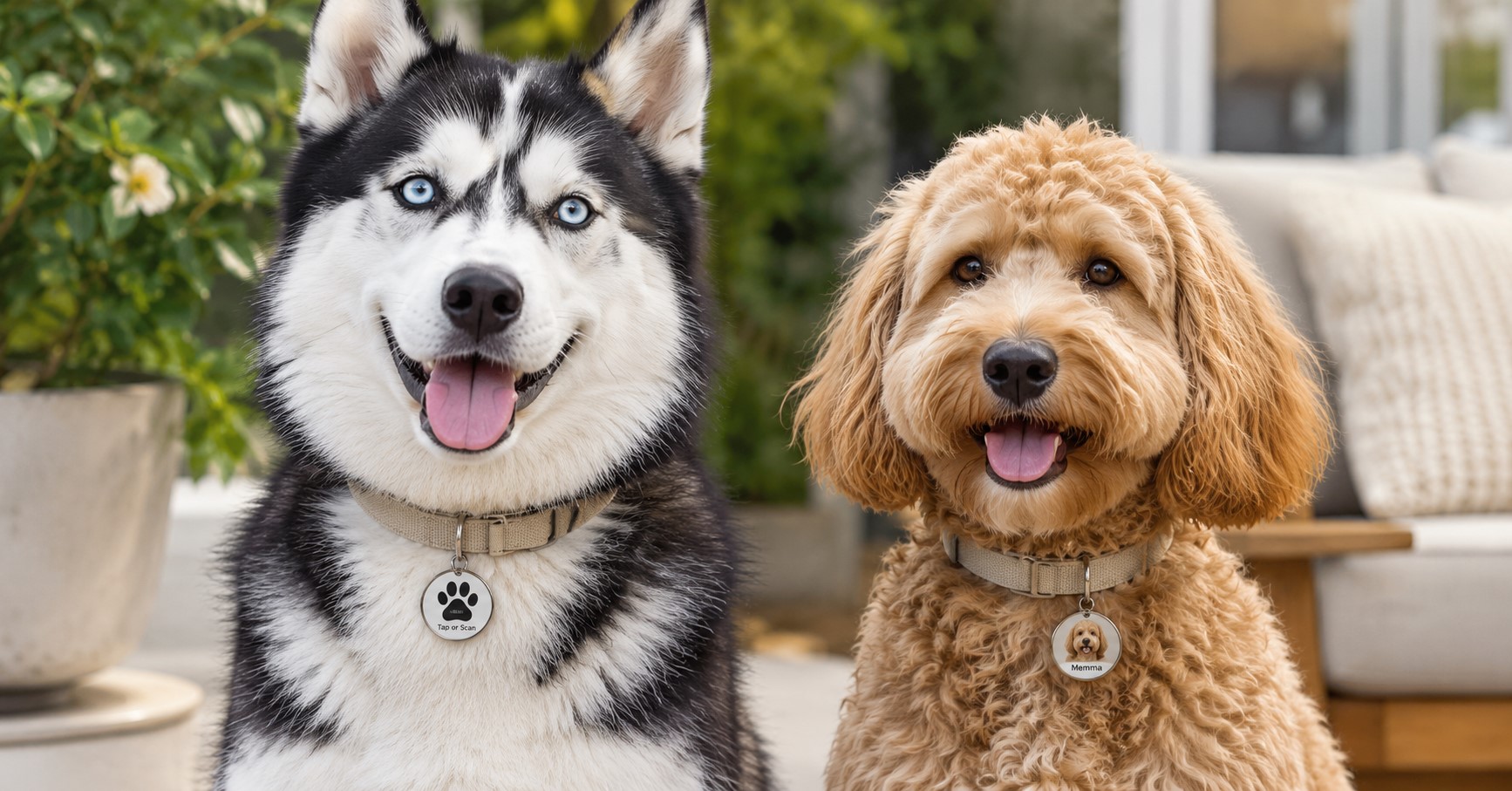
The TapiLink Personalised Photo Pet Tag with NFC & QR combines a custom photo design with smart identification technology.
It allows owners to feature their pet's photograph on the physical tag while connecting to an editable digital profile.
The profile can contain owner contact details, pet information and useful care notes.
A personalised photo tag can be particularly appealing for owners who want something more distinctive than a standard metal disc.
Before ordering, check the photo quality, available print area, tag dimensions and attachment method.
Best for: Dog owners who value both individual design and digital identification features.
5. Slide-On and Collar-Mounted Dog Tags – Best for Reduced Movement
Some dogs dislike dangling accessories, particularly when multiple tags create noise during movement.
Slide-on identification plates and collar-mounted tags provide an alternative to traditional hanging designs.
Rather than swinging freely from a split ring, these products attach more closely to the collar.
They can be useful for active dogs, although compatibility depends on the collar's material, width and construction.
Before purchasing, check that the identification plate remains secure and that its text is easy to read.
Best for: Dogs whose owners prefer a low-profile identification option with less movement.
Smart Dog Tags vs Engraved Dog Tags: Which Is Better?
The main difference between smart and engraved dog tags is how they store and display identification information.
A traditional engraved tag provides fixed text that anyone can read directly. A smart tag connects to digital information that can often be updated after purchase.
Both systems offer advantages.
Traditional engraved dog tags
- Display information without electricity or internet access.
- Can show the owner's legally required details directly.
- Require no scanning or digital interaction.
- Usually need replacing when engraved information changes.
Smart NFC and QR dog tags
- Provide access to editable digital pet profiles.
- Can display additional pet and care information.
- Allow owners to update supported contact fields online.
- Require a compatible smartphone and internet access to open the profile.
For a UK dog owner, the most practical approach may be to combine the two.
Use a physical collar or tag carrying the required owner details, then add a smart tag for extended information and convenient contact access.
This approach takes advantage of both technologies without depending entirely on either.
What Information Must Be on a Dog ID Tag in the UK?
Before buying a new dog tag, it is important to understand the legal requirements.
Under the Control of Dogs Order 1992, dogs covered by the Order must wear a collar displaying the owner's name and address when on a highway or in a public place. The information can appear on the collar itself or on an attached identification plate or badge.
A contact telephone number is strongly recommended, although it is not expressly required by that Order.
For practical identification, consider including:
- Owner's name.
- House number and street address.
- Town or city.
- Postcode.
- Contact telephone number where space allows.
A smart pet profile can hold additional information, but a QR code or online profile alone should not be assumed to satisfy the physical identification requirement.
Official guidance is available through the Control of Dogs Order 1992.
Does a Dog Still Need an ID Tag if It Is Microchipped?
Yes. Microchipping does not remove the applicable legal requirement for physical collar identification.
UK dogs must generally be microchipped and registered by eight weeks of age, subject to applicable exemptions.
A microchip provides a permanent identification number that can be read using a suitable scanner, usually by a veterinary practice, rescue organisation or authorised professional.
However, a member of the public who finds a dog may not have access to a microchip scanner.
That is where a physical ID tag becomes useful.
A visible contact number or scannable digital profile can provide a more immediate way to reach the owner.
For further information, see the UK government's dog microchipping guidance.
The strongest identification arrangement is therefore a current registered microchip, legally compliant physical owner identification and, optionally, a smart tag providing additional contact information.
Why Choose a TapiLink Smart Dog ID Tag?
Choosing a dog identification tag is about more than appearance. The information should remain useful when someone needs it.
TapiLink offers a modern approach to pet identification in the UK, combining a physical accessory with a digital information profile.
Update Contact Details Without Replacing the Smart Tag
Moving house, changing telephone numbers or adding a new emergency contact can make existing identification details outdated.
With TapiLink, you can edit the supported information in your digital pet profile without purchasing a replacement smart tag.
For example, if your dog stays with a family member while you travel, you can update the relevant contact information you choose to share.
Remember that this does not change any legally required information printed or engraved on a separate physical tag.
Share Important Pet Care Information
Not every dog is comfortable being approached by an unfamiliar person.
Some pets may have allergies, ongoing medical needs or behavioural considerations that a finder should understand.
A TapiLink digital profile allows you to share relevant information beyond what would normally fit on a small metal tag.
This could include a note about your dog's temperament, a secondary contact or practical care instructions.
You control which supported information appears on the public profile.
NFC and QR Technology in One Tag
A significant advantage of TapiLink's smart identification products is their dual-access design.
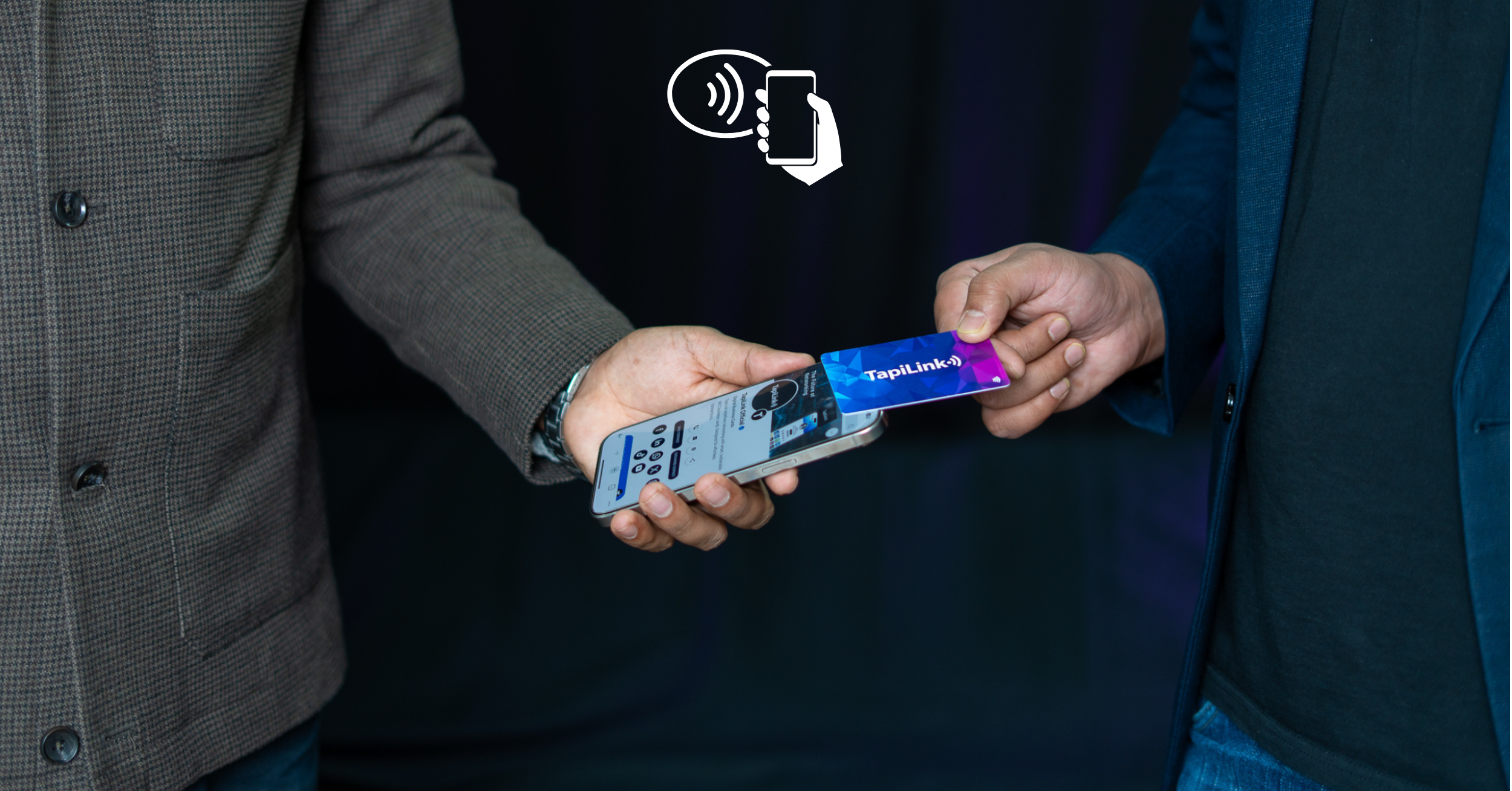
A finder with a compatible NFC-enabled smartphone can tap the tag to open the linked profile.
Alternatively, they can scan the QR code using their phone's camera.
The profile opens in a web browser, so the finder does not need to download a dedicated app.
An internet connection is required.
No Battery and No Required Subscription
Unlike many electronic tracking devices, TapiLink's smart identification tags do not contain batteries that need regular charging.
The Paw Design product also includes lifetime access to its essential digital features without a required subscription.
That makes it an option for owners who want digital identification without managing another rechargeable device.
Optional Finder Location Sharing
If someone finds your dog and opens the TapiLink profile, they may choose to share their phone's current location when the feature is enabled.
This can provide a useful meeting point for arranging a reunion.
It is important to understand that the tag itself does not transmit location data or track your dog continuously.
Explore the collection: TapiLink Personalised Pet Tags & Smart Dog Tags UK.
How to Choose the Right Dog ID Tag for Your Pet
Not every dog needs the same style of identification accessory.
A small puppy and a large, energetic dog may have different requirements.
Choose a Suitable Tag Size
Check the tag's dimensions and weight before ordering.
A tag should fit comfortably without interfering with your dog's movement, feeding or normal daily activities.
For smaller breeds, a lightweight accessory may be preferable.
Prioritise Durability and Water Resistance
Dogs regularly encounter rain, mud, puddles and outdoor environments.
Choose a material that can withstand your dog's normal activities.
Waterproof smart tags can be particularly useful for daily walks in the British weather.
TapiLink's NFC and QR pet tags are designed for everyday wear and are described as waterproof and durable.
Whatever the material, inspect the attachment and printed code regularly for signs of wear.
Check How Easily Someone Can Contact You
An attractive tag is not enough if its identification details are difficult to access.
For engraved tags, check the size and readability of the text.
For QR code tags, test whether the printed code scans reliably.
For NFC tags, confirm that the tap function works on a compatible device.
The aim is to make contacting you as straightforward as possible.
Consider Your Dog's Lifestyle
A dog that mainly enjoys short neighbourhood walks may need a different identification arrangement from one that frequently travels, hikes or stays with different carers.
If your dog spends time with dog walkers, family members or pet sitters, an editable digital contact profile may offer additional convenience.
For dogs that frequently explore rural areas without mobile reception, visible engraved contact details are particularly important.
Review the Total Ownership Cost
A low purchase price does not always tell the whole story.
Some smart identification services charge subscription fees or restrict access to particular features.
Before buying, check which functions are included and whether ongoing charges apply.
TapiLink's Paw Design smart tag offers essential digital profile features without a required subscription.
How to Set Up a TapiLink NFC & QR Pet Tag
Setting up a smart pet tag should be straightforward, but checking the information carefully is essential.
Step 1: Choose Your Preferred Tag
Visit TapiLink's pet tag collection and choose the design that suits your dog.
The standard Paw Design is suitable for owners who prefer a ready-designed appearance.
The Personalised Photo Pet Tag is an alternative for owners who want their pet's photograph printed on the accessory.
Step 2: Create Your Digital Pet Profile
Follow the instructions supplied with your tag to access your account and set up the linked profile.
Add your dog's photograph, relevant contact details and any important care information.
Keep the information accurate and choose carefully which details are publicly visible.
Step 3: Test the NFC and QR Functions
Before attaching the tag, open the profile using both available methods.
Use a compatible NFC smartphone for the tap function and a phone camera for the QR code.
Confirm that the correct profile appears and that your contact information is accessible.
Step 4: Attach and Inspect the Tag
Secure the tag to an appropriate collar or attachment point.
Check that it does not interfere with your dog's movement and that the QR code remains accessible.
Inspect the attachment regularly, particularly after outdoor activities or collar changes.
Step 5: Keep Your Information Current
Review your pet's profile whenever your contact details change.
Keeping information up to date ensures that the smart tag remains useful.
Check your separate physical identification and registered microchip details at the same time.
Are Smart Dog ID Tags Worth Buying?
For many UK dog owners, smart pet identification tags are worth considering because they provide more flexible information than a traditional engraved tag alone.
Their main advantage is not replacing ordinary identification, but extending what a finder can learn about your pet.
A digital profile can hold contact information, photographs and care notes that would not fit on a small engraved disc.
However, smart tags also depend on working technology. QR codes must remain readable, NFC requires a compatible device and online profiles require internet access.
They should therefore be considered an additional identification method rather than a guarantee that a missing dog will be found.
If you want a pet accessory that combines a physical tag with editable digital information, the TapiLink Smart NFC & QR Pet Tag – Paw Design is worth exploring.
For owners who prefer a customised appearance, TapiLink's personalised pet tag range offers an alternative with photo personalisation.
Final Verdict: Which Dog ID Tag Should You Buy in the UK?
The best dog ID tag is one that suits your pet, carries the necessary identification and gives someone a practical way to contact you.
Traditional engraved tags remain a reliable choice for displaying essential owner information without relying on a phone.
QR code tags add access to online profiles, while NFC-enabled smart tags provide an additional tap-based method.
For UK pet owners who want both physical identification and more detailed digital information, combining a legally compliant engraved tag with a smart tag offers useful advantages.
At TapiLink, our goal is to make pet identification more convenient through NFC and QR technology, editable profiles and personalisation options.
Whether you prefer the standard Paw Design or a custom photo-print tag, you can choose a product that complements your dog's existing identification.
Give your pet another way to find their way back to you.
Shop TapiLink Smart & Personalised Pet Tags in the UK
Frequently Asked Questions
1. What is the best dog ID tag in the UK?
Answer: The best dog ID tag in the UK is durable, easy to read and suitable for your dog's collar. Engraved tags provide immediate physical identification, while smart NFC and QR tags offer access to additional digital information. Using both can be beneficial.
2. Are QR code dog tags better than engraved tags?
Answer: QR code dog tags are useful for sharing editable online information, but they are not universally better than engraved tags. Engraved details can be read without a smartphone or internet connection. The two systems can complement each other.
3. Are smart dog tags legal in the UK?
Answer: Smart dog tags can be used in the UK, but a digital profile alone should not be relied upon to meet the legal identification requirement. Dogs covered by the Control of Dogs Order 1992 must display the owner's name and address on their collar or an attached plate or badge.
4. Do NFC dog tags need a battery?
Answer: Passive NFC pet ID tags, including TapiLink's smart pet tags, do not need a battery. A compatible NFC smartphone can read the tag. The linked digital profile requires internet access.
5. Can I update the information on a smart dog tag?
Answer: Yes, many smart dog tags allow information to be updated through an online profile. TapiLink lets owners edit supported contact details, pet photographs and care notes without replacing the smart tag.
Ready to revolutionize your networking approach? Explore TapiLink's range of premium NFC business cards and join the thousands of professionals who've already made the smart choice.