Security is often the last question people ask before buying a digital business card. It probably should be the first.
Understanding NFC vs QR security for business cards is not complicated once you strip away the technical language and focus on what actually matters in practice. What does each technology expose? What can go wrong? And which format, or combination of formats, gives you the most confidence when handing your card to a new contact?
When comparing NFC vs QR security for business cards, NFC offers a physical security advantage through its extremely short operating range of around four centimetres, making remote interception practically impossible, while QR codes are visually readable and can be tampered with if printed on physical materials. Both technologies carry minimal risk for professional use when implemented correctly, and both share only the information the card owner chooses to make publicly available. The safest format combines both technologies with a dynamic, updateable profile behind each.
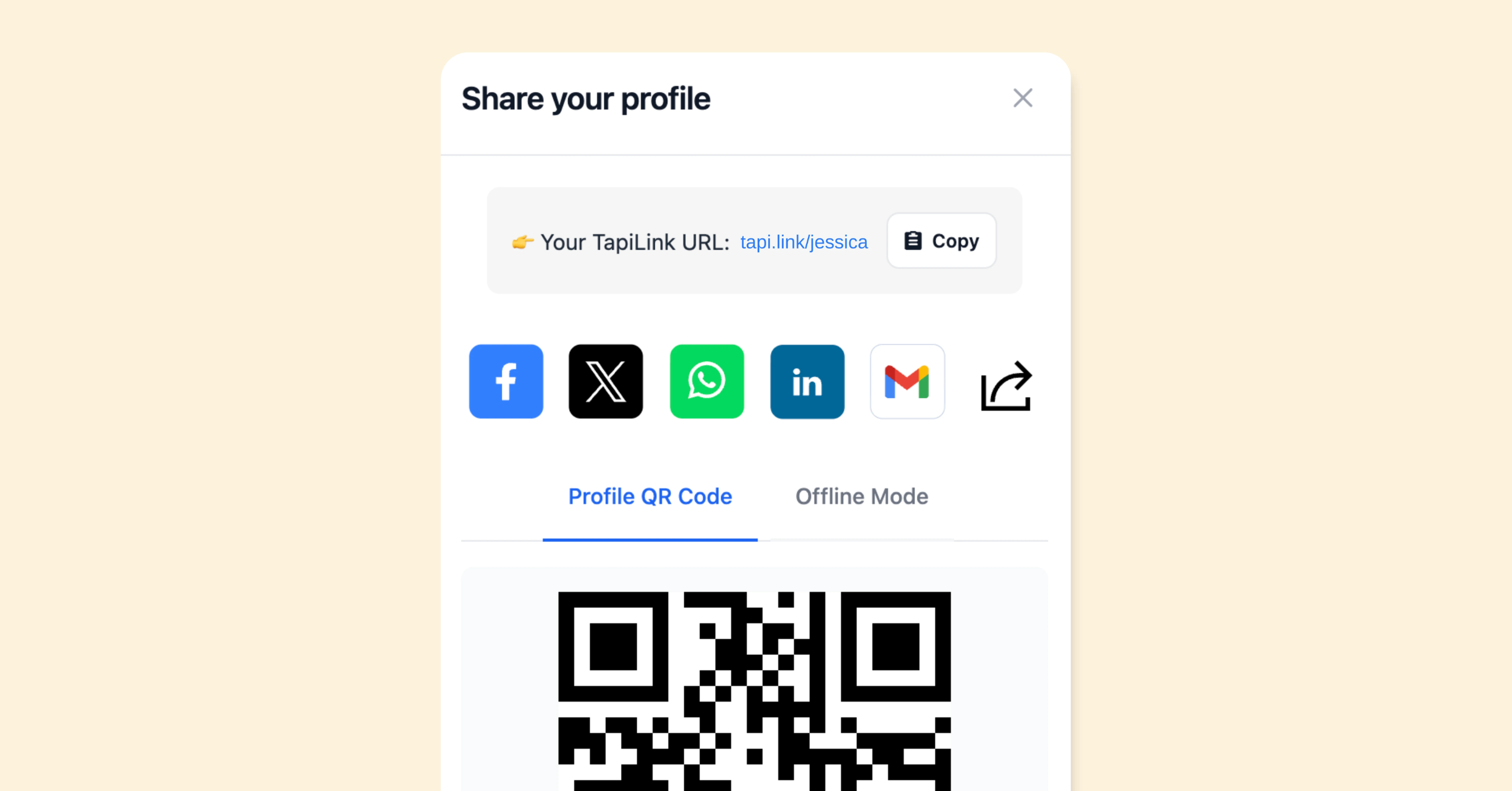
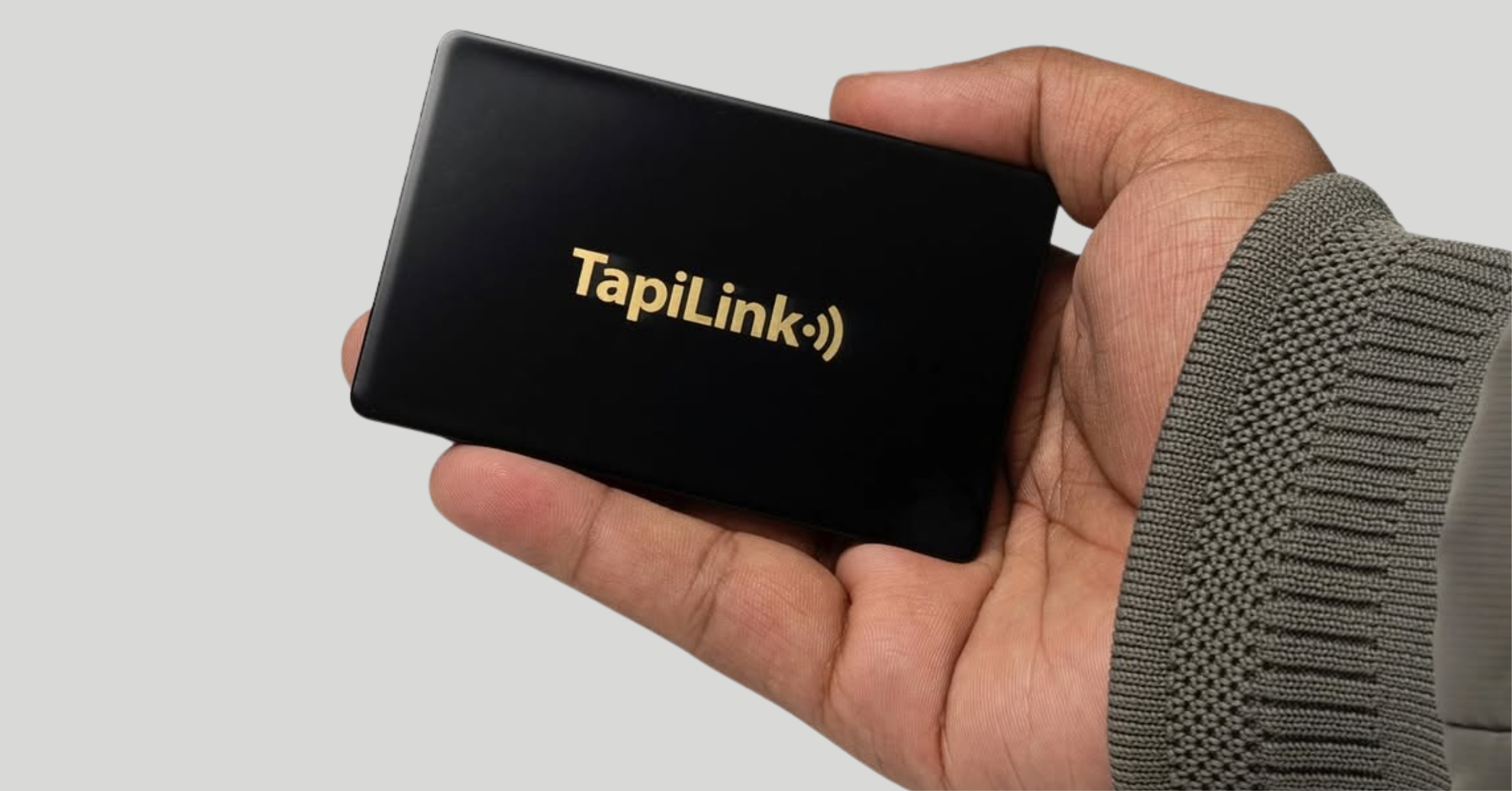
At TapiLink, every business card we produce includes both an NFC chip and a QR code, each linking to the same dynamic profile. You control what the profile shares. You can update or deactivate it at any time. No sensitive data sits on the card itself, whether someone taps or scans.
In this blog, we'll explain how each technology works at a basic level, break down the specific security profile of NFC and QR separately, compare them directly, and explain why the dual format with a dynamic profile behind it is the most secure and practical choice for UK professionals.
How NFC and QR Code Business Cards Actually Work
Before comparing security, it helps to understand what each technology is actually doing. The mechanisms are different, and those differences directly affect the risk profile.
What Happens When Someone Taps an NFC Card
An NFC chip communicates wirelessly with a smartphone using radio frequency at 13.56 megahertz. The phone's NFC reader powers the chip over a distance of a few centimetres and retrieves the data stored on it, which in a business card is a URL. The phone then opens that URL in its browser.
The whole process is instantaneous and requires close physical proximity. There is no Bluetooth pairing, no Wi-Fi connection, no account login on either side.
What Happens When Someone Scans a QR Code
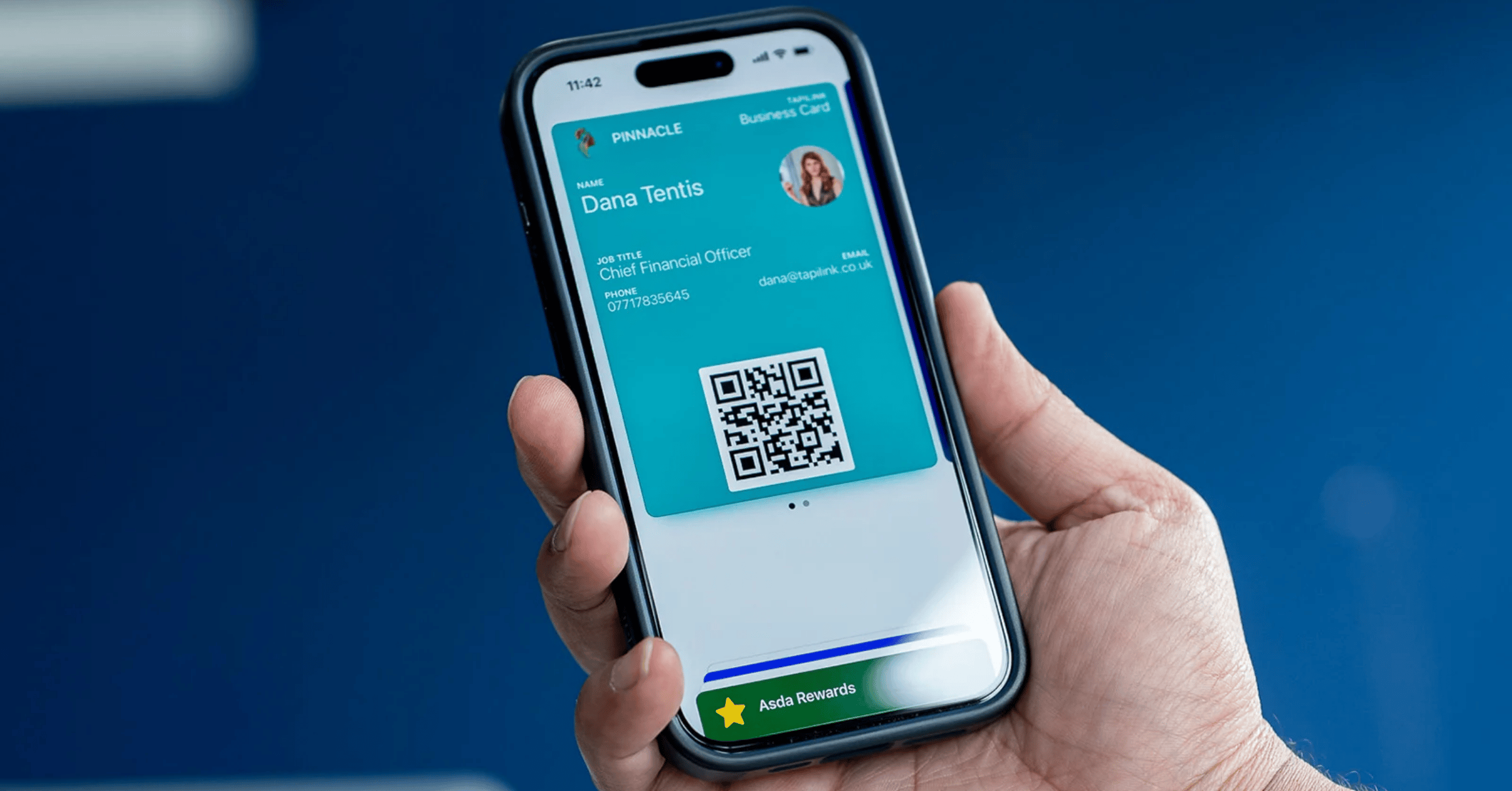
A QR code is a visual pattern that encodes data, in this case again a URL. The phone's camera reads the pattern and decodes it. The browser opens the URL. Same destination, different access method.
The key mechanical difference is that NFC requires physical proximity to a chip, while a QR code can be read by any camera at any distance as long as the code is visible and undamaged. That difference drives most of the security comparison.
NFC Security for Business Cards: The Real Risk Profile
NFC has a strong security reputation, and for business card use it is largely deserved. But the reasons matter.
Physical Range as a Security Feature
The four-centimetre operating range of NFC is not a limitation. It is a security feature. For someone to read your NFC card without your knowledge, they would need to place a device almost directly against it, while it is in your hand, pocket, or bag.
That is not a realistic attack scenario in a professional networking context. The people reading your card are the people you are handing it to. The tap is intentional. The range enforces that intentionality physically.
Compare this to Bluetooth, which operates at up to ten metres, or Wi-Fi, which operates across much larger areas. Both create meaningfully larger windows for unintended data interception. NFC, by its physical nature, does not.
What an NFC Business Card Chip Actually Contains
The chip in a TapiLink NFC business card stores one piece of data: a URL. That is all. No contact details, no phone number, no email address, no financial data, and no stored credentials of any kind sit on the chip itself.
When someone taps the card, their phone reads the URL and opens it. The profile at that URL contains whatever information you have chosen to make visible. If your profile is deactivated, the URL leads nowhere.
There is genuinely very little to attack here. The chip is a signpost to a webpage you control. Reading it without permission gives someone a web address that points to your public professional profile. That is not a security incident. That is the design.
QR Code Security for Business Cards: What to Watch For
QR codes carry a slightly different risk profile, and it is worth being honest about where the real concern lies.
Static QR Codes vs Dynamic QR Codes
A static QR code encodes a fixed destination directly into the visual pattern. Change the destination and you need a new QR code, which means a new card. Static codes also cannot be monitored or deactivated after the fact.
A dynamic QR code encodes a redirect URL. The visual pattern points to a short link that redirects to your actual profile. Change the destination on the redirect, and every future scan reaches the new destination without reprinting anything. Deactivate the profile and every future scan leads nowhere.
The security advantage of dynamic over static is significant. A deactivated dynamic QR code on a lost card stops sharing information the moment you close the profile. A static QR code on a lost card keeps sharing your details permanently.
All TapiLink QR codes are dynamic. They link to the same profile as the NFC chip, which means the same deactivation applies to both access methods simultaneously.
The QR Code Tampering Risk and How to Avoid It
Here is the genuine security concern with printed QR codes: they can be physically tampered with. A malicious actor could in theory print a sticker with a different QR code and place it over the original, redirecting scanners to a fraudulent page.
This is a known risk for QR codes on public-facing surfaces, posters, payment terminals, and restaurant menus. It is a very different scenario for a business card that you carry personally and hand directly to contacts.
A QR code sticker on your business card would be immediately visible and suspicious to anyone examining the card closely. The attack vector exists in theory, but the practical risk for a personally carried and distributed business card is extremely low.
That said, the right response to this concern is awareness, not avoidance. Inspect your cards periodically. If something looks altered, replace it. And choose a supplier whose QR codes are part of the card design rather than stickers applied on top.
NFC vs QR Security for Business Cards: A Direct Comparison
Both technologies are safe for professional use. Neither is categorically more secure in every scenario. But the differences are real and worth understanding.
NFC has the physical range advantage. Nobody reads your chip from a distance. The tap is always deliberate and always requires proximity. For a business card you carry on your person, this is the most relevant security characteristic.
QR codes are visually readable, which creates the theoretical tampering risk described above. But they also have a transparency advantage: you can see exactly what is printed on the card and verify the code is as you intended. With NFC, the data on the chip is invisible without a reader device.
Dynamic QR codes close most of the security gap with NFC by allowing deactivation and destination changes after the fact. Static QR codes do not have this capability, which is why static codes are the inferior choice for professional business card use regardless of the NFC comparison.
For UK professionals using business cards in standard networking and client-facing contexts, both NFC and dynamic QR codes present minimal practical security risk. The profile contains only what you choose to share. The physical card carries no sensitive data. And deactivation closes both access methods simultaneously.
Why the Dual Format Is the Safest Option
The question is sometimes framed as NFC or QR, as if choosing one means excluding the other. But the most secure and practical business card format uses both.
Here is why. A card with only NFC cannot be used by the small proportion of devices that have NFC disabled or unsupported. The contact falls back to asking for a paper card or searching manually, reintroducing friction and potentially a less secure alternative.
A card with only a QR code cannot offer the friction-free tap that many contacts prefer, and it cannot benefit from the physical proximity security characteristic of NFC.
A card with both, each linking to the same dynamic profile, means no contact is excluded from the connection, deactivating one deactivates both, and the card covers every interaction scenario without compromise.
Our NFC PVC Digital Business Cards and NFC Metal Digital Business Cards carry both technologies as standard. One card, two access methods, one dynamic profile behind both.
For professionals who want NFC and QR functionality beyond business cards, our NFC Accessories (keychains, tags, key fobs) and QR And NFC Review Cards follow the same dual-access principle.
Practical Security Tips for UK Professionals Using NFC and QR Cards
These are not complicated steps. They are common sense applied to the specific context of digital business cards.
Control your profile contents carefully. Include only professional contact information on your profile. Work email, work phone, LinkedIn, company website. No personal mobile numbers, no home address, no private social accounts. The profile is a professional networking tool, not a personal record.
Use a dynamic profile, not a static link. If your card links to a fixed URL that cannot be changed, you cannot deactivate it if the card is lost. Dynamic profiles give you the ability to close the connection in minutes. Every TapiLink card uses dynamic profiles as standard.
Deactivate lost cards immediately. If you lose a card, log in and deactivate the profile. From that point, taps and scans lead nowhere. Order a replacement and reactivate when it arrives. The whole process takes a few minutes.
Inspect your cards periodically. Look for any signs of physical tampering, particularly on the QR code area. A legitimate QR code is part of the card design. Any sticker or overlay over the code area is a red flag.
Choose a UK supplier with verifiable security practices. Know who holds your profile data, where it is stored, and what their data protection policy covers. UK GDPR, detailed on gov.uk, sets clear requirements for how personal data must be handled. A supplier operating under UK law is accountable in ways that overseas providers are not.
Conclusion
The NFC vs QR security question for business cards has a clear answer for professional use: both are safe, both carry minimal practical risk, and the strongest option combines them behind a single dynamic profile you control.
Neither technology exposes sensitive data. Neither creates meaningful risk in a professional networking context. The profile contains only what you choose to share, deactivation closes both access methods at once, and the physical card carries nothing that can be misused if lost.
TapiLink builds every business card with both NFC and QR code access as standard, each linked to the same dynamic profile with no subscription fees and full owner control. Free custom design, next-day UK delivery, and complete confidence in how your professional information is shared.
Security should not be the reason you hesitate. It should be the reason you trust.
Browse our full range of NFC PVC Digital Business Cards and make your professional connections with confidence.
Frequently Asked Questions
Question: Is NFC more secure than QR codes for business cards?
Answer: Both are secure for professional business card use when implemented correctly. NFC has a physical range advantage, requiring close proximity for a read, which makes unintended interception essentially impossible in practical scenarios. QR codes carry a theoretical tampering risk on public surfaces but a very low practical risk for a personally carried card. Dynamic QR codes close most of the security gap by allowing deactivation and destination changes after the card is produced.
Question: Can someone hack or clone an NFC business card?
Answer: In theory, an NFC chip can be read by any NFC-capable device. In practice, reading a business card chip gives access only to a URL that opens your public professional profile, which is the intended outcome. There is no sensitive data on the chip to steal. Cloning the chip would reproduce only that same URL, which already points to a publicly accessible page. The attack has no meaningful target.
Question: What is the risk of a QR code on a business card being tampered with?
Answer: The tamper risk for QR codes on public surfaces such as payment terminals and restaurant menus is a documented concern. For a business card that you carry personally and hand directly to contacts, the practical risk is very low. A sticker placed over your QR code would be visible on close inspection. Checking your cards periodically and reporting anything suspicious to your supplier is the appropriate precaution.
Question: What happens to my NFC card if it is lost or stolen?
Answer: Log into your profile dashboard and deactivate the profile. From that point, tapping or scanning the card produces no result. The chip still reads and the QR code still scans, but both lead to a closed profile with no content. Order a replacement card when ready, link it to the same profile, and reactivate. No contact information is accessible during the deactivated period.
Question: Are dual NFC and QR cards more secure than single-technology cards?
Answer: They are more resilient. A dual-format card with a single dynamic profile behind both access methods means deactivating the profile closes both access points simultaneously. A single-technology card leaves one access method intact if the other is somehow compromised. The dual format also ensures no contact is excluded based on their device, which removes pressure on the card owner to use workarounds that might introduce their own risks.
Ready to revolutionize your networking approach? Explore TapiLink's range of premium NFC business cards and join the thousands of professionals who've already made the smart choice.