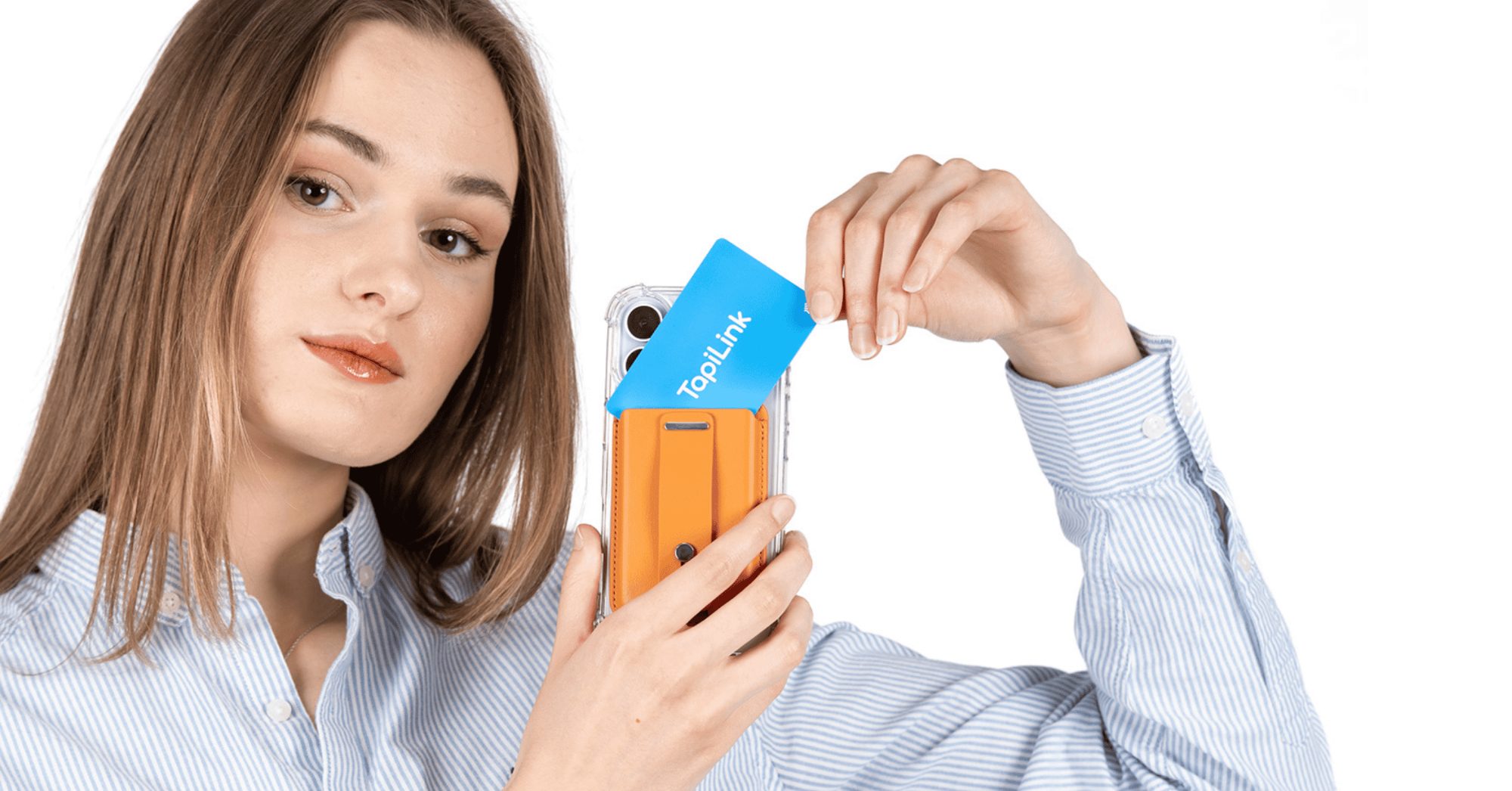
Nine in ten UK adults now carry a card that lets them pay by simply tapping it. That same habit is quietly reshaping professional networking. When nearly 88% of paper business cards are thrown away within a day, printed cards make less sense than ever. Digital profiles that exist only online can feel impersonal. Somewhere between those two extremes sits a smart little product that fits right into the palm of your hand: the Near‑Field Communication (NFC) business card.
An NFC business card is a physical card embedded with a tiny chip that wirelessly transmits your contact details, website links or social profiles to another person’s phone when tapped or scanned. There is no app to download and no battery to worry about. The card looks and feels like a premium business card, but it behaves like a gateway to everything you want to share. One tap connects your new contact to your LinkedIn profile, your latest portfolio or a booking form.
At TapiLink, we design these cards for UK professionals and small businesses. Our products combine NFC technology with QR codes, giving your customers two ways to connect. Every card comes with a dynamic digital profile that you can edit anytime. We do not lock you into subscriptions or hidden fees. You buy it once, and you own it for life. Most importantly, our cards are produced in the UK and dispatched the next working day after artwork approval, with free custom design support to match your brand.
In this blog, we’ll unpack everything you need to know about NFC business cards. We’ll look at how they work, why they matter for UK businesses, the different materials and designs available, and how to choose the right option for your needs. There is a lot to cover, so feel free to skim the headings that interest you most.
Understanding NFC Business Cards
What is near‑field communication?
Near‑Field Communication (NFC) is a short‑range wireless technology that enables devices to exchange data when they come within a few centimetres of each other. You might already use it when you tap your card on a bus or pay with your mobile wallet. According to a MarketsandMarkets report, the global NFC market is projected to grow from $21.69 billion in 2024 to $30.55 billion by 2029, a compound annual growth rate of 7.1%. That growth is driven by the convenience and security that NFC offers over older technologies like magnetic stripes or QR codes.
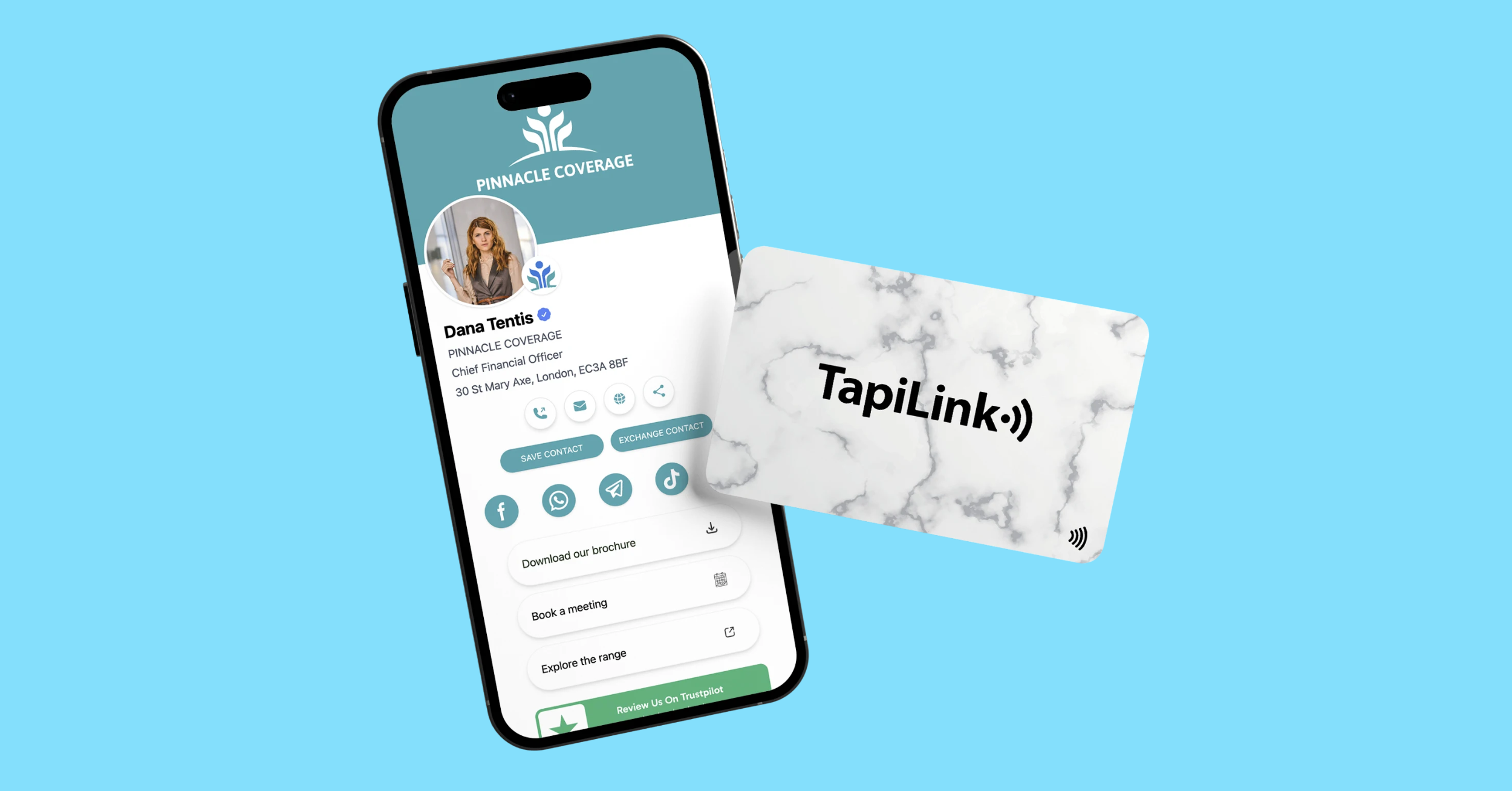
For business cards, NFC technology allows a small chip embedded in the card to send information to a smartphone. When someone taps your card against their device, it triggers an action: opening your digital profile, downloading a vCard, visiting your website or following your social accounts. The process is instant and does not require any app. That single tap bypasses the friction of typing a URL or scanning a QR code. It feels like magicbecause in a way, it is.
How NFC business cards work
The anatomy of an NFC business card is surprisingly simple. Inside each card sits a tiny microchip connected to an antenna. When the card touches a compatible smartphone, the phone’s internal NFC reader powers the chip and reads its data. The chip then relays the link or contact information stored on it. Because the card has no battery, it is always “on” and never needs charging. It also cannot track or spy on the userit only transmits the data you programmed it with.
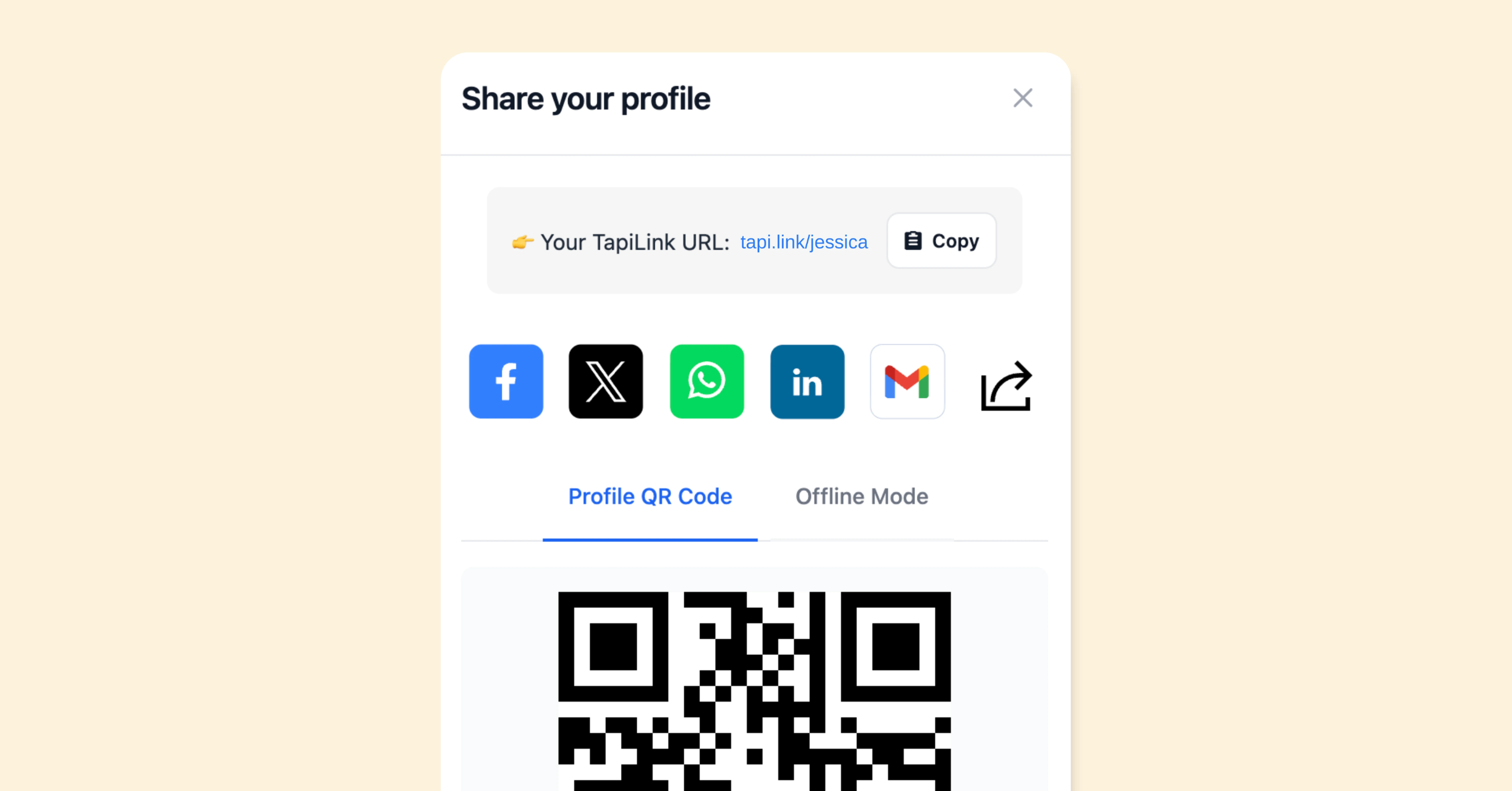
To update what the card does, you log into your TapiLink dashboard. From there, you can change your digital profile, swap out links or add new social platforms. The next time someone taps your card, they will see the updated information immediately. Unlike printed cards, you never have to throw away old stock when your job title changes or your phone number updates.
The dual‑function design of our cards means each one also includes a printed QR code. If a customer’s phone doesn’t support NFC (most smartphones today do, but some older models do not), they can still access your details by scanning the code. It is inclusive design by default.
A brief history of digital networking
Business cards have been around for centuries. They served as calling cards in Victorian England, then evolved into the standard rectangles we all know today. Yet the way we exchange information has moved on. Email replaced letters. Social media replaced personal websites. Contactless payments replaced cash. And in professional networking, the need for a better tool has become obvious. According to a BrightLocal survey, 75% of consumers “always” or “regularly” read online reviews when researching a local business. That same audience expects quick digital connections. Printed cards simply cannot keep up.
As contactless technology becomes second nature, 91% of UK adults possess a contactless‑enabled card, and 95% of those people use it, tapping a card on your phone feels natural. NFC business cards build on that habit. They bridge physical and digital networking seamlessly.
Why UK Businesses Need NFC Business Cards
Convenience that drives action
Imagine a property manager in Leeds meeting potential clients at a networking breakfast. Instead of handing them paper cards, she offers them a sleek card made from brushed silver. One tap, and their phones open a profile containing her contact details, portfolio and a booking form for viewings. It is frictionless. In a world where attention is the scarcest resource, removing friction increases the chance of follow‑up. That is why a local coffee shop using a TapiLink Review Plate saw a 30% increase in Google reviews within weeks people completed the action because it was easy.
NFC cards do the same for networking. The fewer steps you ask your new contact to take, the more likely they will actually save your details. Paper cards require manual entry; digital cards do it for them. Once saved, they can call, email or connect with you on LinkedIn. From a business owner’s perspective, that ease translates into more leads and more conversions.
Professional first impressions
First impressions matter. When you hand someone a metal digital business card engraved with your logo, you are telling them you care about quality. It is a tangible item that reflects your brand. At the same time, the digital action behind it demonstrates that you are modern and tech‑savvy. That combination is memorable. In a crowded trade show, the person with a smart card stands out. We have seen this firsthand when freelancers attend conferences; the one who taps instead of handing paper often becomes the topic of conversation.
Sustainable and eco‑friendly
Paper cards contribute to deforestation and waste. Roughly 88% of paper business cards are thrown away within 24 hours, meaning your contact details end up in the bin almost immediately. NFC cards, on the other hand, are reusable. They reduce paper waste and carbon emissions. If you choose our eco‑friendly options like bamboo or biodegradable cards you are also signalling your commitment to sustainability. We even plant a tree with every order. That matters to customers. Sustainability is no longer a “nice to have”; it is expected.
Updatable and multi‑platform
Printed cards freeze your information at the moment of printing. If your phone number changes, you have to order new cards. If your Instagram handle changes, tough luck. NFC cards avoid that problem entirely. You update your digital profile through our dashboard, and the card points to the new information instantly. You can also link to multiple platforms at onceGoogle, Facebook, Instagram, TripAdvisor and more. Why pick just one? 77% of consumers use at least two review platforms when researching a business. Our multi‑link approach gives them options.
Aligning with contactless adoption
The UK is a contactless society. A UK Finance survey conducted in 2025 found that 91% of UK adults have a contactless‑enabled card and 95% of them use it. Six in ten users tap at least once a week; one in six taps daily. That behaviour normalises the act of tapping. When you introduce a networking tool that uses the same gesture, you ride the wave of habit. People do not need to learn anything new. They just tap.
Types of NFC Business Cards: Materials and Styles
PVC: Affordable and Versatile
PVC cards are the most common type of NFC business card. They are durable, lightweight and cost‑effective. Our PVC Digital Business Cards come in various finishes from sleek black to marble patterns. They are perfect for professionals who need a high‑quality card without the premium price tag. PVC is also water‑resistant, so it stands up to daily wear and tear.
Metal: Premium and Sophisticated
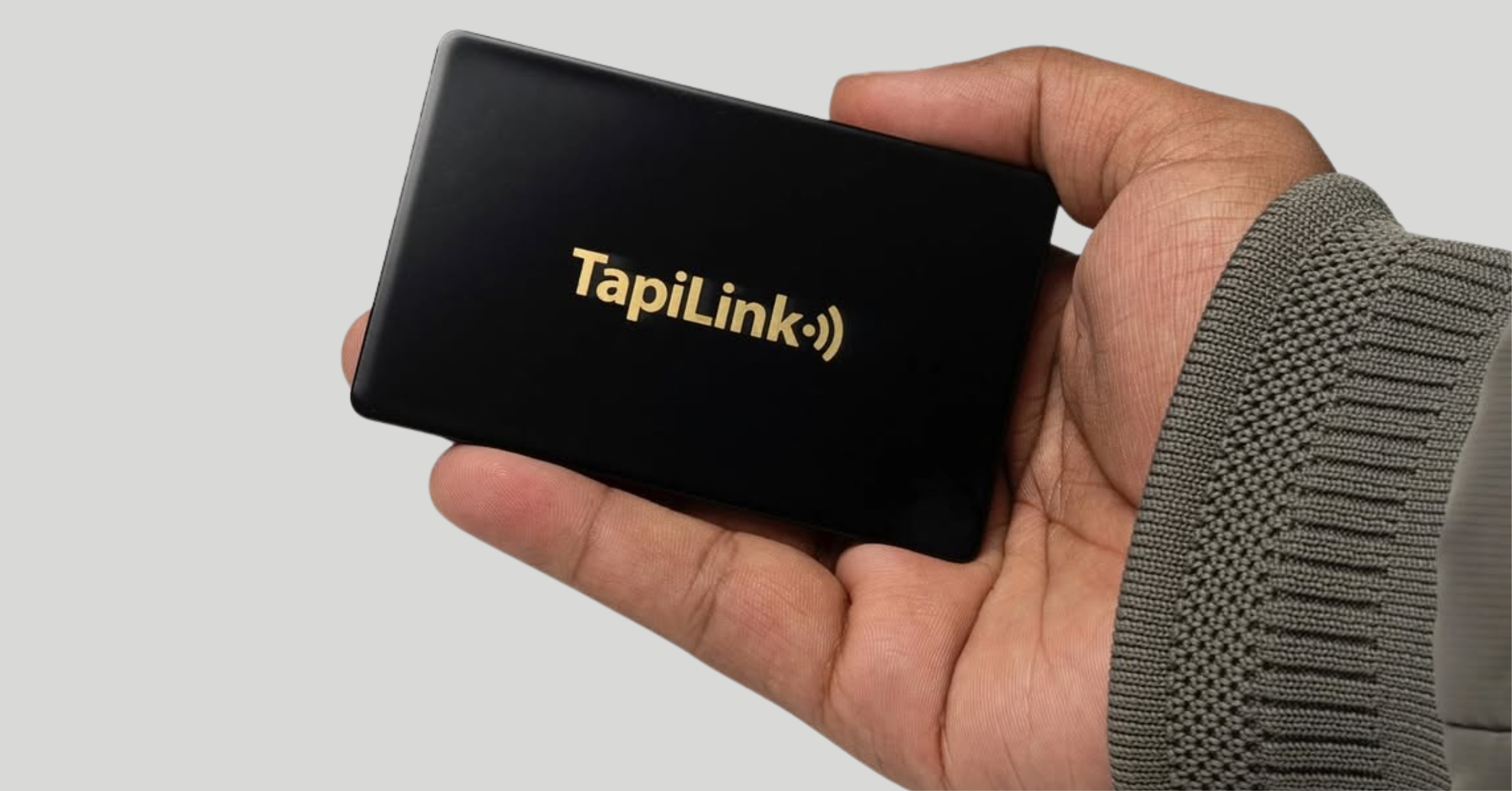
If you want to make a bold statement, metal is the way to go. The Black Metal Engraved Digital Business Cards are our flagship premium option. They are made from stainless steel, etched with your design and finished with a protective coating. When you place this card in someone’s hand, it has a satisfying weight. It communicates authority and craftsmanship. Metal cards are ideal for executives, consultants and creatives who want to stand out.
Wood: Natural and Distinctive
For those who want a warm, tactile alternative to metal or PVC, our Wooden Digital Business Cards offer something genuinely different. Made from sustainably sourced black walnut and other wood varieties, each card carries a unique natural grain pattern. No two cards look exactly alike. The feel of a wooden card in someone's hand is instantly memorable — it is smooth, solid and organic. Wood cards are ideal for architects, interior designers, wellness practitioners and anyone whose brand values craftsmanship or natural materials. They develop a subtle patina over time, which only adds to their character.
Eco‑friendly: Sustainable and Authentic
Beyond our wooden range, we also offer dedicated Eco Friendly Digital Business Cards made from biodegradable materials. These cards are designed for professionals and businesses who want to minimise their environmental footprint without compromising on presentation. Because we plant a tree with every order, your purchase actively supports reforestation projects. Eco cards are popular with wellness brands, green businesses and anyone who wants their values clearly reflected in their networking tool.
Standard vs. Premium vs. Custom
The Standard NFC Business Card refers to a robust, classic design that balances affordability and elegance. In our product range, this aligns with the TapiLink Original Digital Business Card. It offers a clean design with your logo and colours, plus our full multi‑link capabilities.
For those who need something extra, we offer Black Premium PVC Digital Business Card. This includes a premium finish and optional engraving, giving it a luxury feel at a competitive price.
If you want complete creative control, we produce Custom Branded NFC Cards. You choose the material, design, colours and messaging. Businesses with strong brand guidelines love this option because it integrates seamlessly into their existing identity. Our designers work with you to create a card that speaks your language.
How to Choose the Right NFC Business Card
Identify your goals and audience
Start by asking yourself: what do I want this card to do? If your goal is to project luxury at high‑end events, a metal card might be worth the investment. If you care most about sustainability, choose bamboo. If you run a service business and want to provide customers with multiple ways to leave reviews, PVC might be enough. Also consider who will receive your card. A prospective client at a tech conference may appreciate a sleek metal design. A yoga studio owner might love the tactile warmth of a wooden card. Think about your audience’s values.
Decide what to link
Because each card can host multiple links, you need to prioritise. At minimum, include your direct contact details (phone, email), your LinkedIn profile, and your company website. If reviews are important for your business, add links to your Google and Trustpilot pages. If you run a salon or spa, you might add an online booking system. Freelancers often include their portfolio or a case study. Less is not always more customers appreciate choice but avoid overwhelming them.
Consider design and branding
Your card should feel like part of your brand. Match your colours, fonts and tone. We provide free design support to ensure every element from your logo placement to the finish of the cardfeels deliberate. For example, an estate agent may want their card to feature a professional photo of a property they sold. An accountant might choose a minimalist design with clean lines. The key is consistency.
Think about durability and feel
PVC is resilient and lightweight, metal is strong and heavy, bamboo is organic and warm. If you expect to hand out cards frequently, a durable material like PVC might be more practical. If you intend to keep your card for high‑stakes interactions, a metal or wooden card can leave a stronger impression. Consider where you will store your wallet, phone case, lanyard and choose a material that suits your lifestyle.
Step‑by‑Step: Using Your NFC Business Card
- Set up your digital profile. After ordering, you receive access to the TapiLink dashboard. Upload your logo, enter your contact details, add social links and customise your link order. It takes about five minutes.
- Activate your card. Tap your phone on the card to pair it. A prompt will appear guiding you to assign it to your profile. Confirm, and your card is live.
- Test the experience. Tap the card yourself or ask a colleague to try it. Make sure all links open correctly and the design looks right on different devices. Adjust your profile if necessary.
- Start sharing. Carry your card with you. When you meet someone, hold the card near their smartphone. On most phones, the NFC reader is near the top. If their phone does not support NFC, show them the QR code printed on your card.
- Update as needed. New job? New portfolio? Log into the dashboard and update your details. No reprinting.
That is the entire process. It is honestly that simple. Most businesses try it once and never go back.
Real‑World Examples and Case Studies
A café in Manchester
Picture a busy café in Manchester’s Northern Quarter. The owner, Sarah, has always relied on word of mouth and Instagram. She decides to invest in Eco Friendly Digital Business Cards for her team. Each barista carries one. When customers compliment the coffee, the barista hands them the card and says, “Tap this to see our menu and leave us a review.” Within a month, Sarah notices a spike in Google reviews and direct messages. Customers mention the novelty of the card. One even posts a video about it on TikTok. More importantly, those reviews help the café appear higher on local search results. They attract tourists who look for “best cafés in Manchester” and trust the star rating. The investment pays for itself in weeks.
A freelance graphic designer
Daniel, a freelance graphic designer based in Bristol, spends a lot of time at networking events. He used to hand out paper cards printed on recycled paper. People would compliment the design and then lose the card. He switched to a Black Metal Engraved Digital Business Card with his logo cut into the steel. At the last creative conference he attended, he tapped the card on a potential client’s phone. They opened his portfolio on the spot, scrolled through his work, and booked him for a project the next week. “That card paid for itself in one job,” Daniel says. It also became a conversation starter. “That metal card is a powerful piece of marketing,” he adds. “People talk about it long after the event.”
A dental clinic in London
Dr Ahmed runs a dental practice in London. Reviews are critical in healthcare59% of people consider online reviews when selecting healthcare providers. Dr Ahmed places QR And NFC Review Stands in the waiting room, but he also gives each patient a small PVC Digital Business Card at checkout. The card links to the clinic’s review page and an appointment reminder system. The staff ask patients to tap it once they leave. Because the process takes seconds, many patients complete the review before walking out the door. Within two months, the clinic’s Google rating climbs from 4.2 to 4.8 stars. New patients mention the reviews in their booking forms. Dr Ahmed credits the cards for making it effortless to leave feedback
Advanced Uses: Beyond Contact Sharing
Automating follow‑ups
NFC cards can trigger automation. Link your card to a CRM form and instantly capture lead data. When a prospective client taps your card, they are asked to fill in their name and email. The information feeds directly into your mailing list. You can then send a personalized follow‑up email or schedule a call. That automation turns casual conversations into structured sales pipelines. It works for small businesses to estate agents, coaches, tradespeople.
Delivering digital experiences
Your card can do more than share contact details. You can link to a welcome video, a price list, a downloadable eBook, a scheduling calendar, or a review request. Some clients use their cards as loyalty stamps: customers tap each time they visit, and after ten taps they receive a discount. Others use it to deliver a digital product after payment. The possibilities are endless. NFC technology is just the carrier; creativity determines the payload.
Multi‑user profiles and team management
If you manage a team, you can set up cards for each employee with central oversight. The manager controls the master profile and can update each card’s links from one dashboard. This is useful for agencies or franchises with multiple branches. If a staff member leaves, you reassign their card to a new person. No wasted stock, no confusion.
Integrating with review platforms
With our multi‑link approach, you can link your card to Google, Facebook, Trustpilot, TripAdvisor and more. This is important because consumers use multiple review platforms. In the 2024 BrightLocal survey, 41% of consumers use three or more review sites when choosing a business. By offering various options, you maximise the chance that customers leave a review on the platform they prefer. Each review boosts your credibility and search rankings.
Tips and Best Practices
Keep your profile updated
An NFC card is only as good as the information it contains. Make a habit of checking your profile once a month. Ensure that your phone number, email, job title and social links are current. If you recently published a new article, launched a product or achieved a milestone, feature it prominently. People who tap your card are interested; give them something fresh to look at.
Use clear, compelling copy
When someone opens your profile, they should immediately know who you are and what you do. Use a simple headline like “Helping small businesses improve their online reputation” instead of “Company Name LTD.” Then follow with a short paragraph and strong call‑to‑action buttons. You control the narrative. Do not make users scroll through paragraphs of fluff.
Personalise your introduction
If you attend many events, prepare different versions of your profile for different audiences. For example, at an industry conference, highlight your speaking engagements and publications. At a local networking mixer, focus on community involvement and local collaborations. The card remains the same, but your message shifts with your audience. That adaptability is a superpower.
Encourage tapping
The card itself will not create connections if you do not prompt people. When you meet someone, hand them the card and say, “Tap this with your phone.” Make eye contact. They will likely smile, curious about the technology. The action becomes a talking point. Do not assume people know what to do; guide them. Most will be intrigued.
Combine with other review tools
NFC business cards pair well with our review stands and plates. A hair salon, for instance, might place a QR And NFC Review Stand at the reception desk so customers can leave feedback immediately after their appointment. Meanwhile, the stylists carry personalized cards to give out at networking events. This integrated approach covers both in‑store and out‑of‑store experiences. It is a small detail that produces big returns.
The Technology Behind NFC and Data Security
Not all contactless technologies are created equal. NFC operates at 13.56 MHz, a frequency standardised by the International Organization for Standardization (ISO/IEC 14443). That standard governs contactless payment cards and passports, which means your business card uses the same secure protocol trusted by banks and governments. Because the antenna in the card is so small and the range so shorttypically less than four centimetresit is difficult for anyone to intercept the signal without being literally next to you. That short range is a built-in security feature. And here is where it gets interesting: the card only stores a small piece of data, usually a URL. It never stores personal information. When someone taps your card, their phone opens that URL in a web browser. That is it. The card cannot read data from their phone.
The chips we use are passive, meaning they draw power from the phone during the tap. They do not broadcast continuously and cannot track anyone. Each chip has a limited memory capacity, often between 48 bytes and 1 kilobyte so it simply cannot hold malicious code. The data is also locked by default. You can rewrite it through our secure dashboard, but no one else can change it. And because the URL points to a page hosted on our servers with SSL encryption, your visitor’s connection is protected end‑to‑end. As with any online technology, you should choose strong passwords for your account and keep your login credentials private, but the card itself adds no risk. This combination of short range, limited memory and encrypted hosting makes NFC cards a surprisingly safe networking tool.
Industry‑Specific Applications in the UK
Different sectors have different needs. Here are some ways UK businesses are using NFC cards to streamline operations and delight customers.
Restaurants and Cafés
In hospitality, timing and convenience are everything. A busy bistro in London might place NFC cards on tables instead of printed menus. Diners tap to see the menu, filter by dietary preference and leave reviews as they wait for the bill. Because 72% of travellers always check reviews before booking a stay, linking directly to your review page can boost bookings. A small café in Glasgow uses NFC cards for loyalty: customers tap the card at checkout, and after ten taps, they get a free drink. The card lives on the barista’s lanyard, so it never gets lost. The result? More repeat visits and higher average spend.
Salons and Barbers
Hairdressers and barbers live by word of mouth. One of the biggest challenges is getting clients to leave reviews while the experience is fresh. A salon in Birmingham hands each client an NFC card after their appointment. The card opens a simple form: leave a star rating, write a short comment and rebook. Clients tap as they finish paying, often while still in the chair. The salon saw its Google rating climb from 4.0 to 4.7 in three months. That is not a coincidence. Stylists also carry personalised metal cards to networking events, linking to portfolios and price lists.
Hotels and B&Bs
From boutique hotels in Bath to B&Bs in the Lake District, hospitality businesses are using NFC cards to enhance the guest experience. A small hotel chain hands out bamboo cards at check‑in. Guests tap to connect to the hotel’s Wi‑Fi, see local recommendations and book spa treatments. At checkout, the same card prompts them to leave a review on TripAdvisor. Because 72% of travellers read reviews before booking, making it effortless to leave one can significantly improve occupancy rates. The cards also serve as digital room keys when paired with the hotel’s access control system. No more demagnetised key cards.
Healthcare and Clinics
Trust is paramount in healthcare. A dental clinic in Edinburgh uses NFC cards to provide aftercare instructions. Patients tap the card to watch a short video on post‑procedure care, download their appointment schedule and leave feedback. Because 59% of people consider online reviews when selecting healthcare providers, the clinic also links to its review page. The process reassures nervous patients and increases review volume. Physiotherapists and chiropractors use similar cards to share exercise videos tailored to each client.
Gyms and Fitness Studios
A gym in Cardiff issues metal NFC key fobs to members. When members tap the fob at the entrance, it logs their workout; when they tap it at the smoothie bar, they receive loyalty points. Personal trainers carry their own cards linking to booking pages and nutrition plans. Yoga studios hand out bamboo cards that link to class schedules, playlists and discount codes. The ease of tapping encourages members to engage with additional services and share their experiences on social media. One studio saw class bookings increase by 20% after implementing NFC cards for membership management.
Estate Agents and Tradespeople
Property professionals rely on first impressions and follow‑up. An estate agent in Newcastle attaches an NFC sticker to “For Sale” signs. Passers‑by tap to see a video tour and arrange viewings. At open houses, agents hand out metal cards that link to listings, mortgage calculators and review pages. Tradespeople, electricians, builders use PVC cards that link to recent projects, testimonials and contact forms. Customers appreciate the transparency. And because the card is durable, it survives in a toolbox or glove compartment. One tap can turn a casual enquiry into a booked job.
[Image suggestion: Collage of different business types using NFC cards: a menu at a restaurant, a salon chair, a hotel reception, a gym key fob, a real estate sign. Alt text: Various UK industries deploying NFC business cards and tags.]
Common Mistakes and How to Avoid Them
Even a great tool can fail if misused. Here are the most common errors we see and how to sidestep them:
- Forgetting to update your profile. A card with outdated contact details is as bad as a wrong phone number. Log in monthly and review your information. You will thank yourself the next time a client tries to reach you.
- Not telling people to tap. Do not assume everyone knows what an NFC card does. Hand the card to someone and say, “Tap this with your phone.” Those six words make all the difference.
- Overloading the landing page. Linking to ten different places might seem comprehensive, but it overwhelms the user. Prioritise. Put your most important call to action at the top and offer other links below.
- Skipping the design phase. A poorly designed card undermines your brand. Invest time in choosing colours, fonts and finishes that reflect your identity. Remember, the card is both a tool and an advertisement.
- Buying cheap, generic cards. Not all NFC cards are built equal. Low‑quality cards may have weak antennas or chips that fail after a few uses. Invest in qualityit pays off in reliability and perception.
- Ignoring analytics. Our dashboard shows how many times your card has been tapped and which links are being used. If no one is clicking your portfolio, maybe it needs a refresh. Data turns guesswork into strategy.
One unexpected mistake? People often hand someone a card and then immediately snatch it back. Relax. Let them hold it for a moment while they tap. They will remember the interaction better.
Future Trends in NFC Business Cards
Technology never stands still. Here are trends to watch:
Integration with digital wallets. Apple Wallet and Google Wallet already host boarding passes and event tickets. Soon, your NFC business card could live inside your phone, letting you share details by tapping your device. Physical cards will remain for tactile impact, but virtual cards will complement them.
Dynamic content based on context. Imagine your card recognising whether someone taps it at an event, at your office or online and then showing tailored information. Geolocation and time‑based triggers can make that possible. A morning tap might present a “Book a free consultation” offer; an evening tap might highlight your latest blog post. It feels like personalisation because it is.
AI‑driven networking. Artificial intelligence will soon analyse who taps your card and suggest follow‑up actions. Did you meet a potential partner at a fintech meetup? Your dashboard could recommend sending them a specific case study or connecting on a particular platform. AI will make networking smarter, not harder.
Sustainable materials innovation. Expect more eco‑friendly materials, recycled plastics, hemp composites, even mycelium leather. The demand for sustainable networking tools is rising, and material science is keeping pace. Eco‑friendly does not mean boring; it means responsible and imaginative.
Security enhancements. As NFC adoption grows, so will the focus on security. Advanced chips with tamper detection and cryptographic features will become standard. Our cards already meet strict standards, but we are always exploring improvements.
The short answer: NFC cards today are impressive, but tomorrow’s versions will be smarter, greener and more personalized.
[Image suggestion: Futuristic illustration of digital wallet integration, AI recommendations and eco materials. Alt text: Concept art showing future trends of NFC business cards.]
Calculating the ROI of NFC Business Cards
When evaluating any business tool, cost matters. Traditional paper cards are cheap to printoften around 10 pence each in bulk. But you rarely print just once. If you update your job title or phone number or rebrand, you print again. A typical small business might order 500 cards three times a year, spending around £150. That figure does not include design fees or the cost of missed opportunities when someone misplaces your card.
Now compare that to a one‑off NFC card. A standard card from TapiLink costs about the same as a single box of premium paper cards (pricing varies depending on material). You buy it once. You never reprint. You update your details online. It is always current. That alone saves money over time. Add in the intangible benefits: improved brand perception, higher lead conversion, and more reviews. A dentist who invested in 20 cards for his team saw a half‑star increase in his Google rating within two months; his appointment books filled up. A freelancer secured a £3,000 project after tapping his card once. If you win just one new client because of your card, the ROI is obvious.
There is also an environmental ROI. Consider that 100 billion paper business cards are printed worldwide each year, yet about 88% are discarded within a week. By switching to a reusable card, you reduce waste and appeal to eco‑conscious customers. That environmental goodwill translates into brand loyalty, which is hard to quantify but easy to feel.
Integrating NFC Business Cards into Your Marketing Strategy
Your card is a powerful tool, but it performs best when integrated into a broader marketing plan. Think of it as a bridge between offline interactions and your online presence. Here is how to make the most of it:
Pair with social media campaigns
Launching a seasonal promotion? Update your card’s profile link to direct users to a dedicated landing page or a special offer. Then announce the promotion on your social channels and encourage people you meet to tap your card for instant access. A florist in Brighton used this tactic for Valentine’s Day: she updated her card to showcase a “Tap to order” bouquet page. Everyone she met at networking events had a direct route to purchase, and sales doubled compared to the previous year. It shows how a simple update can turn a casual conversation into revenue.
Enhance your email marketing
When someone taps your card and submits their details through a form, send them into a welcome email sequence. Introduce yourself, share valuable resources and invite them to follow you on social media. Because the lead came from an in‑person interaction, the open rates are often higher than cold email lists. Combine this with personalised video messages to stand out even more. A freelance photographer in Sheffield sends a thank‑you video to everyone who taps his card. He books more shoots because people feel a genuine connection.
Align with Google Business Profile
For local businesses, your Google Business Profile is often the first impression online. Linking your card to your Google review page encourages customers to leave feedback while they are still thinking about you. This matters because search algorithms weigh recent reviews heavily. You can also link to your booking button or Q&A section. A dental surgery in Leeds updated their card to direct patients straight to the “Book an appointment” button on Google; they filled cancellations quickly and reduced no‑shows. The result was a more efficient schedule and happier patients.
Use NFC for event marketing
At trade shows and conferences, foot traffic is high and attention spans are short. Embed a digital brochure or presentation into your card. When someone taps, they download a PDF or slide deck. Include a call to action for a post‑event webinar or consultation. At a recent fintech expo in London, a payment startup embedded a demo video in their card. Attendees watched it on their phones while still at the stand. The company then used analytics to follow up with those who viewed the video. The takeaway? When your card delivers valuable content instantly, you stay top of mind after the event.
Measure and refine
Every tap leaves a digital footprint in your dashboard. Track which links get the most clicks, which events generate the most taps and which calls to action convert best. Use these insights to refine your marketing strategy. Perhaps your LinkedIn profile draws more engagement than your website; maybe customers prefer booking appointments through a messaging app. Let the data guide you. Marketing is not set‑and‑forgetit is to test and evolve. And with NFC cards, you finally have real‑world analytics for real‑world interactions.
And here is the thing: integrating your NFC card into your marketing plan does not require a big budget. It just requires intention. When you connect your offline and online efforts, you create a seamless customer journey. People appreciate that, and so will your bottom line.
Why TapiLink Stands Out
Plenty of companies sell smart cards, so why choose us? We are a UK‑based business built for UK businesses. That means fast shipping from our British workshop, no customs fees and customer support in your timezone. We do not outsource production. Our cards are printed, engraved and assembled locally. When you call, we answer.
Our unique selling points are clear:
- No subscriptions or hidden fees: You pay once and own the card for life. Other providers often charge monthly subscriptions or lock you into renewal cycles. We do not.
- Free custom logo design: Our designers create a bespoke layout that matches your brand. Competitor A may charge extra for design support; Competitor B might only offer templates.
- Fast UK delivery: Once your artwork is approved, your card ships the next working day. So you receive it quickly. Competitor C ships from overseas, which can take weeks. We produce and dispatch locally, so there are no customs delays and no long waits.
- Dynamic digital profile: Update links anytime. Some providers lock you into a single destination; we let you change as often as you need.
- Multi‑platform in one card: Link to Google, Facebook, Instagram, TripAdvisor and more. Other products require separate cards for each platform.
- Eco‑friendly options and tree planting: Our bamboo and biodegradable cards offer a green alternative. We plant a tree with every order. Competitor A rarely offers eco materials. That is a gap.
- Rounded corners and safe design: Our plates and stands have rounded edges to prevent accidents. Small details make a big difference.
- UK support team: We are a call or email away. You will not be routed to an overseas call centre.
But there is something else. We love what we do. We care about helping fellow businesses succeed. We have seen how a simple tap can change someone’s day. We want you to experience that too.
Conclusion
NFC business cards are not a gimmick; they are the natural evolution of professional networking. They merge the tangibility of a physical card with the power of digital content. They reduce waste, improve follow‑up rates and make your brand look forward‑thinking. In a UK market where contactless interactions are the norm and consumers rely heavily on online reviews, adopting this technology is a smart move.
TapiLink offers a range of NFC business cardsPVC, metal and eco‑friendlyeach with a dynamic digital profile and free custom design. We produce and ship from the UK, so your card arrives the next day. Every purchase comes with lifetime updates and no hidden fees. Whether you need a simple Standard NFC Business Card, a luxurious Black Premium PVC Digital Business Card or a bespoke custom solution, we can help you make the switch.
Take control of your networking. Make it effortless for people to connect with you. TapiLink Original Digital Business Card is waiting. Tap into the future.
Frequently Asked Questions
Q. What phones work with NFC business cards?
Answer: Most smartphones released in the past five years support NFC. This includes all iPhones from the iPhone 8 onward and the majority of Android devices. If someone’s phone lacks NFC, they can scan the QR code printed on your card. The dual‑access design ensures no one is left out.
Q. Are NFC business cards secure?
Answer: Yes. The chip only transmits the data you program into it. It cannot access or store personal information from the user’s phone. Our platform uses secure servers, and you can password‑protect certain links. The technology is the same as that used in contactless payments, which millions use daily.
Q. Can I change what my card links to?
Answer: Yes, you can. Log into the TapiLink dashboard, edit your profile, and save. The card will immediately point to the new information. This flexibility means you never need to reorder cards when your details change.
Q. How many links can I add to one card?
Answer: There is no hard limit, but we recommend keeping the number manageable. Focus on the platforms that matter most: your website, contact details, social profiles and review pages. You can arrange the links in order of importance. Remember, you can update them anytime.
Q. What happens if I lose my NFC card?
Answer: If your card is lost or stolen, log into your account and deactivate it. You can transfer your profile to a new card at no extra cost. The lost card becomes inert; it cannot transmit any data without your activation.
Ready to revolutionize your networking approach? Explore TapiLink's range of premium NFC business cards and join the thousands of professionals who've already made the smart choice.