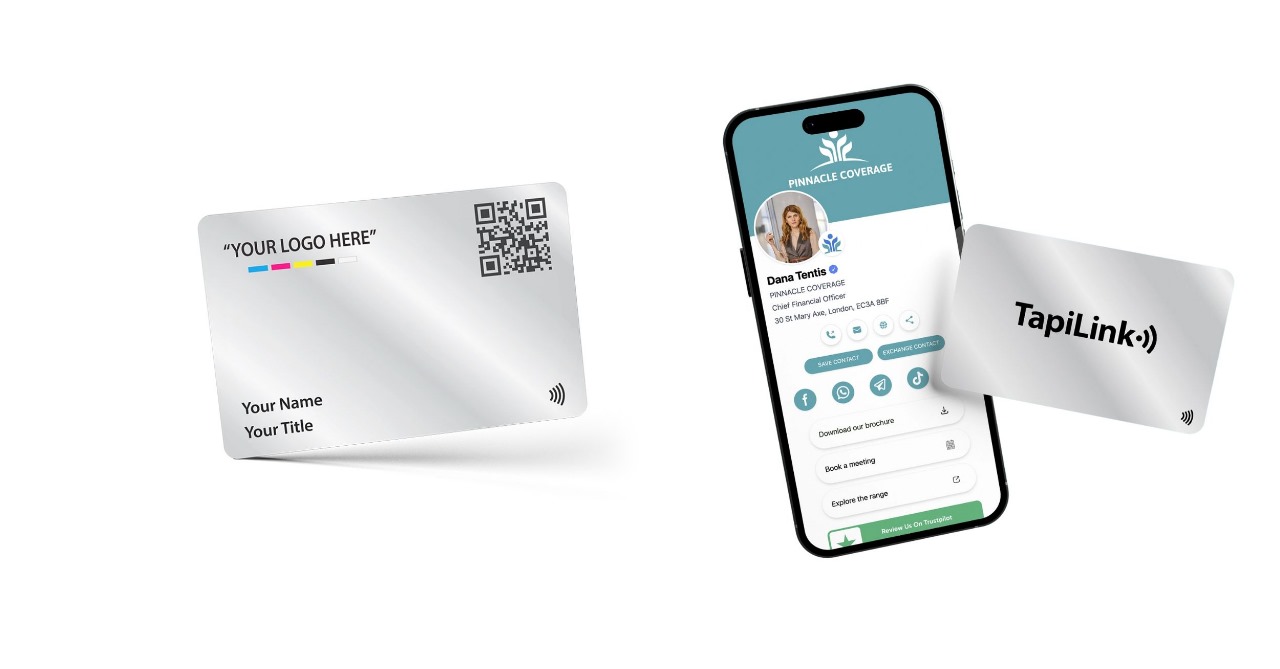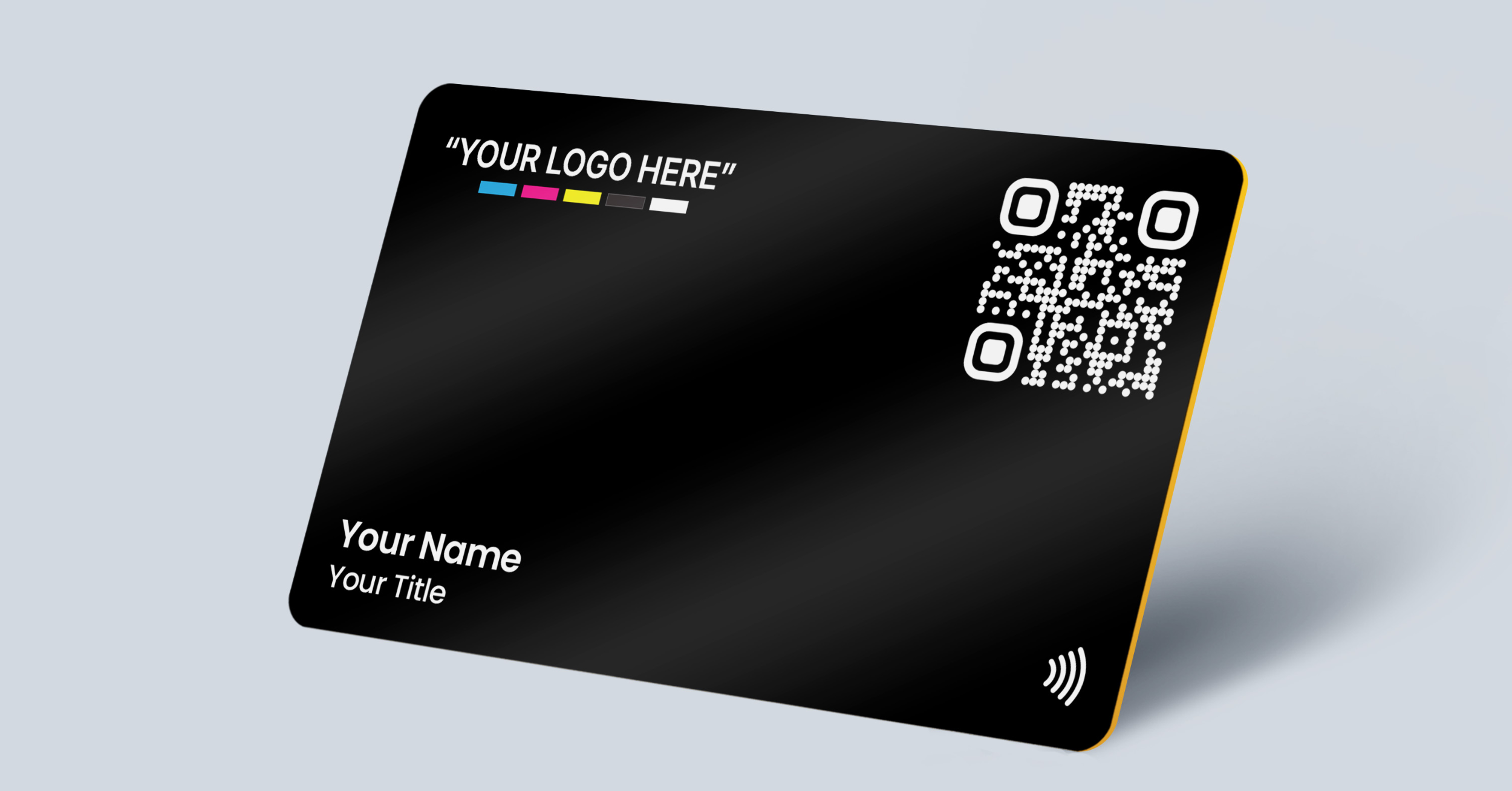
PVC NFC business cards are smart cards with a durable plastic body and an embedded NFC chip that shares your details with one tap. They are the affordable, everyday choice in the NFC range, valued for strong print quality, a wide colour range and durability that matches a standard bank card. For most people and most budgets, a PVC card does everything an NFC card should, which is why it is the most popular tier and the natural starting point for going digital.
At TapiLink, we make PVC one of our core materials because it delivers the full smart-card experience at the most accessible price. This guide explains what a PVC card is, how durable it is, the print and colour options it allows, and where it fits on value, so you can decide if it is the right material for you. To see how PVC compares with metal, wood and eco, our guide on digital business card materials sets them side by side, while this one focuses on PVC.
What is a PVC NFC business card?
A PVC NFC business card is a tappable digital business card made from PVC plastic, the same durable material used for bank cards. As a plastic smart card, it holds an NFC chip and links to a digital profile you can update for free, so it shares your details with a tap and needs no app for the person receiving them.
PVC is often called the standard NFC card material because it is the most common and the most practical for everyday use. It gives you the complete NFC experience, sharing your profile instantly with a tap or QR code, in a familiar card format that feels natural to hand over and easy to carry.
How durable is a PVC card?
A PVC card is durable enough for daily carrying, matching the durability of a standard bank card. That is a useful benchmark, because a bank card lives in a wallet, gets handled constantly, and lasts for years, and a PVC tap card is built to the same standard.
Our PVC cards are also waterproof and resistant to everyday wear and tear, so they hold up to real-world use. They are more hard-wearing than paper, which creases and frays, while sitting below metal for outright toughness. For most professionals, that bank-card level of durability is more than enough, since the card is treated much like the other cards in your wallet.
What print quality and colours can PVC offer?
PVC offers excellent print quality and a wide colour range, which is one of its biggest advantages. Because it takes colour and detail so well, PVC is the best material for vivid, full-colour designs, glossy finishes and bold branding.
This makes PVC especially suited to brands with colourful logos or striking visual identities. Where metal leans towards engraved, minimal designs, a PVC card can carry rich colour, marble effects, photographs and detailed graphics with a clean, glossy result. If your brand relies on colour to stand out, PVC gives you the freedom that harder materials cannot. How the surface finish affects the look is worth understanding too, which we cover in card finishes matte vs glossy.
Is a PVC card compatible with all phones?
Yes, a PVC NFC card works with both iOS and Android phones, and the person receiving your card needs no app to view it. When you tap the card to a phone, or someone scans its QR code, your profile opens in their browser.
This broad compatibility is part of what makes PVC such a practical everyday card. It also carries a QR code alongside the NFC chip, so it works even on the rare phone that cannot tap. Whoever you meet, on whatever modern phone they carry, you have a reliable way to share your details.
Why is PVC such good value?
PVC is the best-value material because it delivers the full smart-card experience at the most accessible price. You get instant tap-to-share, a digital profile, free updates and QR compatibility, without paying the premium that metal commands.
The value goes further when you consider how NFC cards work. Because your details live on a digital profile you update for free, you buy the card once and never reprint. A TapiLink card is a one-off purchase rather than an ongoing cost, so a PVC card gives you a smart, updatable card for a single, low outlay. With next-day UK delivery and free logo design included, it is a fast, affordable way to start networking digitally. If you are weighing it against a premium upgrade, our guide on original PVC card vs premium materials helps you decide.
Who should choose a PVC card?
PVC suits anyone who wants a practical, affordable and good-looking card without paying for premium weight. That covers most professionals, freelancers, small businesses and larger teams ordering in volume, where cost per card matters.
It is the right choice if budget is a priority, if your brand relies on colour and print detail, or if you simply want a dependable everyday card that does everything an NFC card should. If you later want a more premium feel for client-facing moments, you can always add a metal card alongside it, but for sheer practicality and value, PVC is hard to beat.
At TapiLink, we make our PVC cards durable, waterproof and fully customisable, with the same instant tap-to-share profile and free lifetime updates as every card in our range, made in the UK with next-day delivery. When you are ready, you can shop PVC cards through our PVC Digital Business Cards and add your logo with our free design service.
FAQ
Q1. What are PVC NFC business cards?
Answer: PVC NFC business cards are smart cards with a durable plastic body and an embedded NFC chip that shares your details with one tap. They are the affordable, everyday choice in the NFC range, valued for print quality, colour options and bank-card-level durability.
Q2. Are PVC cards durable?
Answer: Yes. A PVC card matches the durability of a standard bank card, and our cards are waterproof and resistant to everyday wear and tear. They are far more hard-wearing than paper, while sitting below metal for outright toughness.
Q3. Do PVC NFC cards work with all phones?
Answer: Yes. PVC NFC cards work with both iOS and Android, and the person receiving your card needs no app to view it. They also carry a QR code alongside the NFC chip, so they work even on phones that cannot tap.
Q4. Are PVC cards good for colourful designs?
Answer: Yes. PVC takes colour and detail very well, making it the best material for vivid, full-colour designs, glossy finishes and bold branding. It suits brands with colourful logos or striking visual identities.
Q5. Why choose PVC over metal?
Answer: PVC gives you the full smart-card experience at a much lower price, with better colour and print options. Metal offers a heavier, premium feel and greater durability, but PVC is the smarter choice when value, colour and everyday practicality matter most.
Ready to revolutionize your networking approach? Explore TapiLink's range of premium NFC business cards and join the thousands of professionals who've already made the smart choice.