A digital business card app differs from paper cards and vCards in three ways that matter: it updates instantly, it captures the people you meet as leads, and it shares in more ways than either. A paper card is simple and needs no phone, but it is fixed and easily lost. A vCard sends your contact details as a file, but it does not update or capture anything. An app-based card does both, and adds lead capture on top, which is why it suits people who network regularly and want to act on the contacts they make.
At TapiLink, we build the app around the whole exchange, not just handing over details, so this comparison is an honest look at where each option genuinely fits. This guide weighs paper cards, vCards and an app-based digital card on the things that actually affect your networking, so you can choose what suits you. If you want to see everything the app does first, our overview of the TapiLink app covers it.
What is the difference between the three?
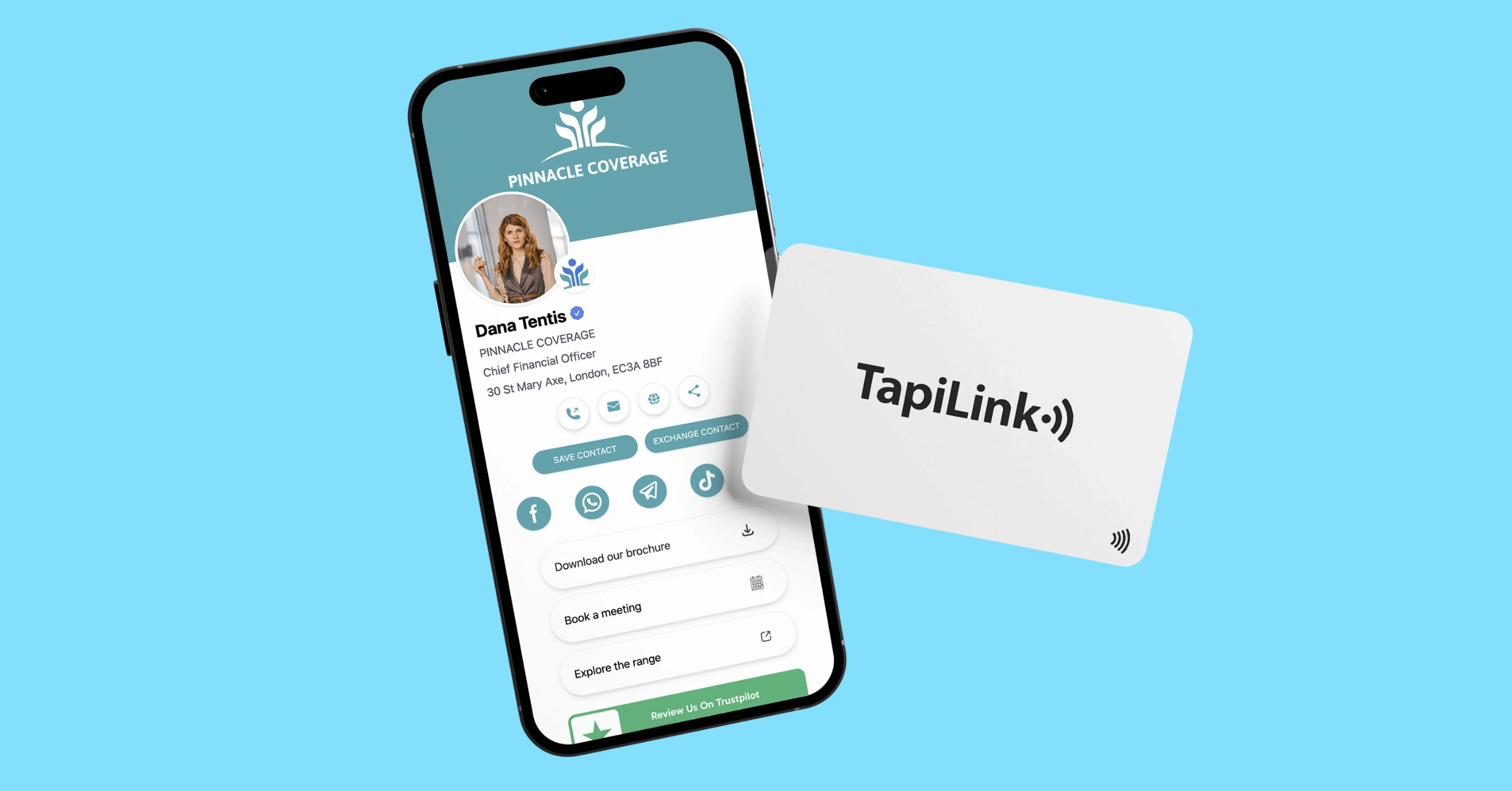
The three are different tools for sharing who you are. A paper business card is a printed card with fixed details. A vCard is a digital contact file (.vcf) that someone can save to their phone's contacts. A digital business card app is a live profile you share by tap, QR, link or wallet, which also captures leads and updates whenever you change it.
The core distinction is that paper and vCards share static information, while an app-based card is a living profile plus a capture tool. That difference shapes everything below, so it is worth holding in mind as we compare them.
How does an app compare to paper cards?
Against paper, an app wins on updates, sharing and capture, while paper wins on simplicity and needing no device. A printed card is instantly understood and works without a phone, which is its real strength, and some people will always value that.
But the paper is fixed. The moment your number, role or website changes, every card you have handed out is wrong, and reprinting is the only fix. Cards are also easily lost or thrown away, and they capture nothing about the person you gave them to. An app-based card updates for free so it is never out of date, shares in several ways, and captures the people you meet as leads. If the physical feel of a card matters to you, our NFC Business Cards combine a real card you can hand over with the live profile behind it, so you are not choosing between the two.
How does an app compare to a vCard?
Against a vCard, an app wins on richness, presentation and capture, while a vCard wins on being a simple, universal contact file. A vCard is handy because almost any phone can save a .vcf straight into contacts, and it needs no particular app.
Its limits are that it is static and plain. A vCard drops your details into someone's contacts, but it does not present your brand, hold your links, photos or review link, or update after you send it, and it does not capture anything in return. In the vCard vs app comparison, the app gives you a branded, editable profile with links and actions, plus lead capture, where a vCard gives only the raw details. For simply passing on a number, a vCard is fine, but it does little beyond that.
Which option updates and stays current?
Only the app-based card updates and stays current on its own. Because your details live on a live profile, any change you make appears instantly wherever your card has been shared, with no reprinting and nothing to resend.
Paper cards cannot update at all, and a vCard is fixed the moment it is sent, so a later change means contacting people again. This is one of the clearest digital business card app benefits, because your details change over a career far more often than people expect, and an app is the only one of the three that keeps up automatically.
Which option helps you capture leads?
Only the app captures leads, which is often the deciding difference. Paper cards and vCards are both one-directional: you give your details away, but you record nothing about the person you gave them to.
An app-based card is two-directional. As well as sharing your profile, it lets you scan the other person's card and save them as a lead, so you leave a conversation with their details, not just having left yours. That capture, covered in the AI lead scanner, is what turns networking into a list of contacts you can actually follow up, which neither paper nor a vCard can do.
Which should you choose?
Choose based on how much your networking depends on staying current and following up. If you rarely share your details and never need to capture contacts, a paper card or vCard may be all you need. If you network regularly, change details over time, or want to act on the people you meet, an app-based card does far more.
For most working professionals, the honest answer is that the app covers what paper and vCards do and adds what they cannot, which is why it suits anyone whose contacts are worth following up. You do not have to give up a physical card to get it, since a card and the app work together.
At TapiLink, we built the app so sharing your details, keeping them current and capturing the people you meet all happen in one place, which paper and vCards were never designed to do. When you are ready, you can go digital by downloading the TapiLink app, and if you want a physical card to hand over as well, our NFC Business Cards open your live profile with a single tap.
FAQ
Q1. What is the difference between a digital business card app and a paper card?
Answer: A paper card has fixed printed details and needs no phone, but it cannot update, is easily lost, and captures nothing. A digital business card app is a live profile you share by tap, QR, link or wallet that updates instantly and lets you capture the people you meet as leads.
Q2. Is a digital business card app better than a vCard?
Answer: For most uses, yes. A vCard is a simple contact file that drops your details into someone's phone but does not present your brand, hold links, update after sending, or capture anything. An app gives you a branded, editable profile plus lead capture.
Q3. Do I still need a paper card if I use an app?
Answer: Not necessarily, but you can have both. A physical NFC card lets you hand something over in person while the live profile sits behind it, so you get the feel of a card with the benefits of an app.
Q4. Which option keeps my details up to date?
Answer: Only an app-based card. Your details live on a live profile, so any change appears instantly wherever your card has been shared. Paper cards cannot update, and a vCard is fixed once it is sent.
Q5. Can a paper card or vCard capture leads? No. Both only share your details one way. An app-based card also lets you scan and save the other person's details as a lead, so you leave a conversation with their contact information, not just having shared yours.
Ready to revolutionize your networking approach? Explore TapiLink's range of premium NFC business cards and join the thousands of professionals who've already made the smart choice.