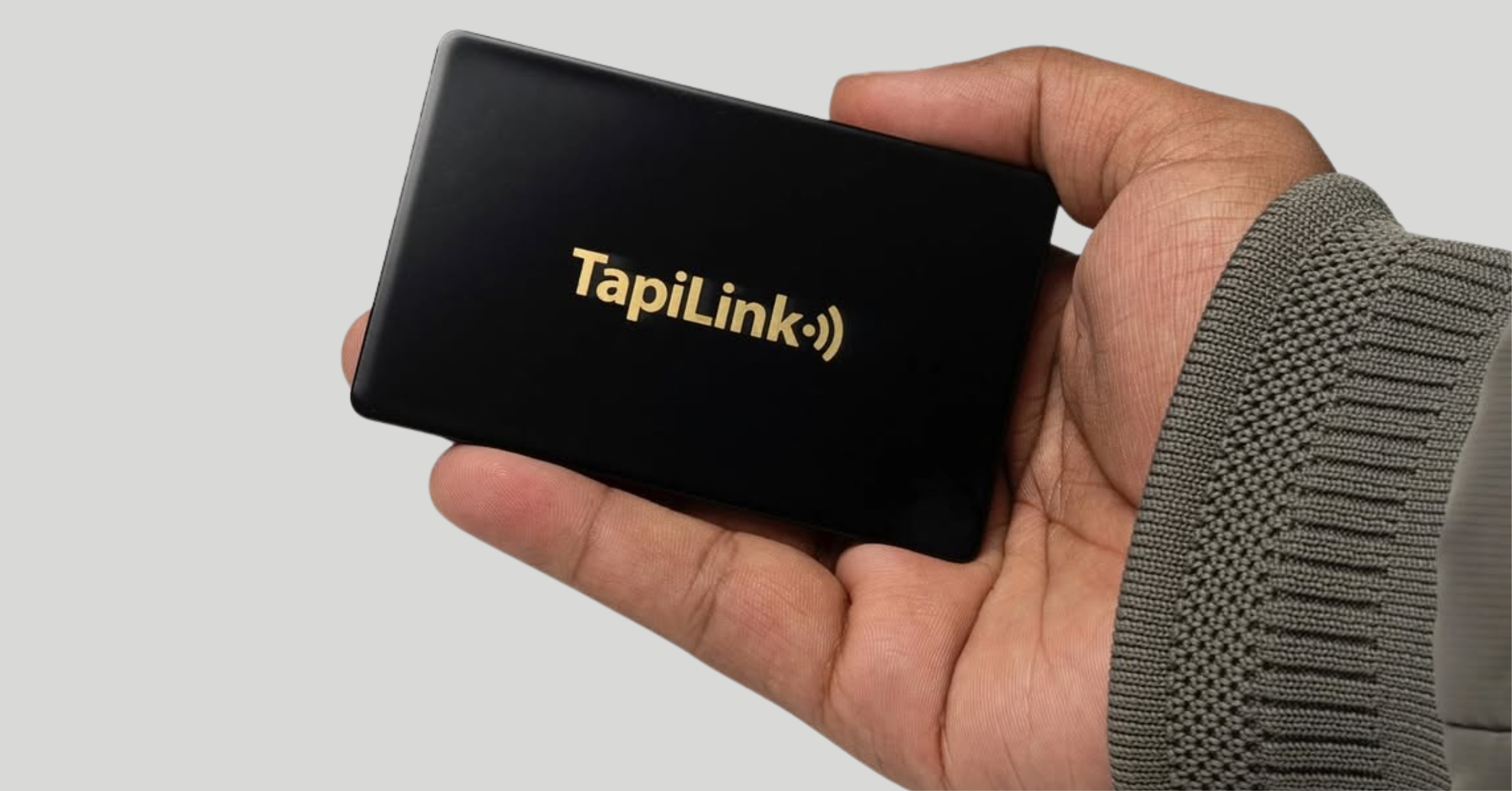
NFC card thickness and weight are among the first things a person notices when you hand them a card, and they quietly signal quality before a word is said. A standard NFC card is around the thickness of a credit card, while premium materials like metal are heavier and have more presence in the hand. The feel is not just cosmetic: weight and thickness shape the impression your card makes, which is why they matter more than the numbers alone suggest.
At TapiLink, we pay attention to the feel of a card because that first moment of handover is when it does its most important work. This guide explains how thick and heavy NFC cards are, how the feel differs by material, and why that physical experience signals quality. If you want the exact dimensions instead, our guide on standard NFC business card size covers the measurements in full, while this one focuses on how the card feels.
How thick is an NFC business card?
A standard NFC business card is around the thickness of a credit card, slim enough to sit comfortably in a wallet. That keeps it familiar and practical, because it fits the same slots and holders as the cards people already carry.
Thickness varies by material. A standard PVC card stays close to the credit card norm, while a metal card can feel more substantial in the hand. [VERIFY: confirm the exact thickness figures for TapiLink's PVC and metal cards before publishing.] The point is that thickness is a balance: slim enough to carry easily, but solid enough to feel like a real object rather than a flimsy one.
How much does an NFC card weigh?
Weight is where the materials differ most, and it is a large part of how a card feels. A plastic card is light and unobtrusive, while a metal card carries noticeable weight that gives it presence the moment it is picked up.
That difference in card weight in grams is exactly what people register at handover, even if they never think about it consciously. [VERIFY: confirm the actual weight figures for TapiLink's card materials before publishing.] A heavier card feels considered and substantial, which is why weight is so closely tied to the sense of quality, especially with metal.
Why does a heavier card feel more premium?
A heavier card feels more premium because weight is something people instinctively associate with quality. We tend to read heft as a sign that an object is well made, and a card is no exception.
This heavy card premium feel is the reason metal cards make such a strong first impression. When you hand someone a card with real weight, it signals that you have invested in how you present yourself, and that impression transfers to you and your brand. A light card can still be perfectly professional, but it does not create the same pause. If that impression matters to your work, it is worth weighing up whether the premium is justified, which we cover in metal cards worth the cost.
How does thickness compare to a paper business card?
An NFC card is generally more substantial than a typical paper business card, which is part of why it feels different in the hand. Paper cards are measured in gsm, a weight of the paper stock, and even a thick paper card is thin and light next to a solid NFC card.
The card gsm equivalent comparison helps explain the contrast: a premium paper card might feel reassuringly thick for paper, but it is still paper, and it flexes and wears in a way a solid card does not. An NFC card, particularly in metal, has a rigidity and weight that paper cannot match, which is a large part of why it reads as a step up.
Does thickness or weight affect how the card works?
No, thickness and weight are about feel and impression, not function. An NFC card of any standard thickness holds the same chip and shares your details with the same tap, so a heavier card does not work any better than a lighter one.
What weight and thickness change is the experience of receiving the card, not its technology. This is worth remembering when you choose: you are choosing how the card feels and the impression it makes, while every card shares your profile the same way. Choosing the material that gives the right impression is the real decision, which we explore in the best card material for first impressions.
At TapiLink, we build our cards so the feel matches the quality of what they do, from a practical everyday card to a metal card with real presence. When you are ready to feel the difference, our Metal Digital Business Cards offer the weight and finish that make the strongest first impression, with the same instant tap-to-share profile as every card in the range.
FAQ
Q1. How thick is an NFC business card?
Answer: A standard NFC business card is around the thickness of a credit card, so it fits easily in a wallet. Thickness varies by material, with metal cards tending to feel more substantial than standard plastic ones.
Q2. How much does an NFC card weigh?
Answer: Weight depends on the material. A plastic card is light and unobtrusive, while a metal card carries noticeable weight that gives it presence in the hand. That added heft is a large part of why metal feels premium.
Q3. Why do heavier business cards feel more expensive?
Answer: Because people instinctively associate weight with quality. A heavier card reads as considered and well made, which creates a stronger first impression at handover. A metal card is the clearest example of this effect.
Q4. Does a thicker or heavier card work better?
Answer: No. Thickness and weight only affect how the card feels, not how it works. Every NFC card holds the same chip and shares your details with the same tap, regardless of its weight.
Q5. How does an NFC card compare to a paper card?
Answer: An NFC card is generally more substantial than a paper card. Paper is measured in gsm and stays thin and flexible, while a solid NFC card, especially in metal, has a rigidity and weight paper cannot match, which is why it feels like a step up.
Ready to revolutionize your networking approach? Explore TapiLink's range of premium NFC business cards and join the thousands of professionals who've already made the smart choice.